Picture this: I’m standing in a cramped kitchen, the fridge door open like a portal to culinary destiny, when a friend challenges me to turn a handful of humble veggies into a dish that will make her taste buds sing. I’ve always been the kind of person who thinks a salad is just a side, but that moment, a sudden craving for crunch and zing, turned the whole idea on its head. The air smelled of fresh cucumber, earthy carrots, and a faint hint of soy sauce, while the clatter of knives and the hiss of hot oil painted a chaotic symphony. I laughed at the absurdity of the challenge, but deep down I knew this would be a game‑changing experiment. I had to do it, because I’d been watching my friends rave about those “crunchy” Asian salads and felt I had to bring my own flavor to the table. The result? A crisp, bright, and utterly addictive salad that refuses to stay on the plate.
I’ve spent years tinkering with sauces and textures, but this recipe is different. The crunch of the cucumber and carrots is not just a surface texture—it’s a bite that shatters like thin ice, releasing a burst of freshness that lingers. The sauce, a silky blend of soy, sesame oil, honey, and mustard, coats each piece like velvet, turning simple vegetables into a savory, sweet, and slightly smoky masterpiece. I dare you to taste this and not go back for seconds; the balance of umami, acidity, and sweetness will have you reaching for the bowl again. I’ll be honest—my first bite was a little too good, and I ate half the batch before anyone else got a chance. Most recipes get this completely wrong, but I’ve found that the secret lies in the quick sear and the precise ratio of oils to vinegar.
What sets this version apart is not just the ingredients but the method. The vegetables are lightly fried until the edges are crisp, then tossed in a sauce that is both sweet and savory. The sesame seeds add a nutty crunch that complements the crispness, while the green onions bring a bright, almost citrusy note. The dish is so versatile that it can be served as a side, a light lunch, or even a topping for grilled meats. I’ve tested it with chicken, fish, and tofu, and it always elevates the meal. The best part? It’s so simple that even a novice can master it with minimal fuss.
The kicker is that the sauce’s flavor profile is surprisingly deep, thanks to the toasted sesame oil and Dijon mustard. The honey provides a gentle sweetness that balances the saltiness of the soy sauce, while the rice vinegar adds a bright, almost citrusy tang. The result is a dish that feels both comforting and exciting, like a summer breeze in a bowl. And the best part? The crunch stays even after the sauce has had a chance to soak in, thanks to the quick sear technique. I promise you—by the end of this guide, you’ll wonder how you ever made it any other way. Let me walk you through every single step, and you’ll see why this is hands down the best version you’ll ever make at home.
What Makes This Version Stand Out
- Crunch: The vegetables are lightly fried until the edges are golden and crisp, delivering a satisfying snap that lingers long after the first bite. The quick sear locks in moisture while creating a texture that feels almost like a fresh crunch from a street vendor’s salad. This is a game‑changer for anyone who thinks salads are forever soggy.
- Flavor Depth: The sauce blends low‑sodium soy, toasted sesame oil, honey, and Dijon mustard, creating layers of umami, sweetness, and a subtle peppery bite. The result is a sauce that coats the veggies like velvet, yet still allows the natural flavors to shine through. The balance is so precise that it feels like a symphony in your mouth.
- Speed: The entire dish takes less than 20 minutes from prep to plate. No long marinating times or complicated steps—just a quick fry, a quick toss, and you’re done. This makes it perfect for busy weeknights or for impressing guests with a fresh, homemade dish.
- Versatility: Whether you’re serving it as a side, a light lunch, or a topping for grilled meats, this salad adapts effortlessly. It pairs beautifully with teriyaki chicken, grilled salmon, or even a hearty bowl of ramen. The flavor profile is flexible, making it a crowd‑pleaser at any gathering.
- Healthful: The use of avocado oil and toasted sesame oil keeps the dish heart‑healthy, while the vegetables provide fiber, vitamins, and minerals. The sauce is low‑sodium, and the honey adds a natural sweetness that keeps you satisfied without a sugar crash. It’s a guilt‑free indulgence.
- Make‑ahead Friendly: The salad can be prepared ahead of time and kept in the fridge for up to 24 hours. The crunch remains crisp, and the sauce only becomes more flavorful as it sits. This makes it ideal for meal prep or for feeding a crowd.
- Ingredient Quality: Using fresh, locally sourced cucumbers and carrots elevates the dish. The quality of the soy sauce and sesame oil also matters; a good low‑sodium soy sauce adds depth without overwhelming the delicate flavors.
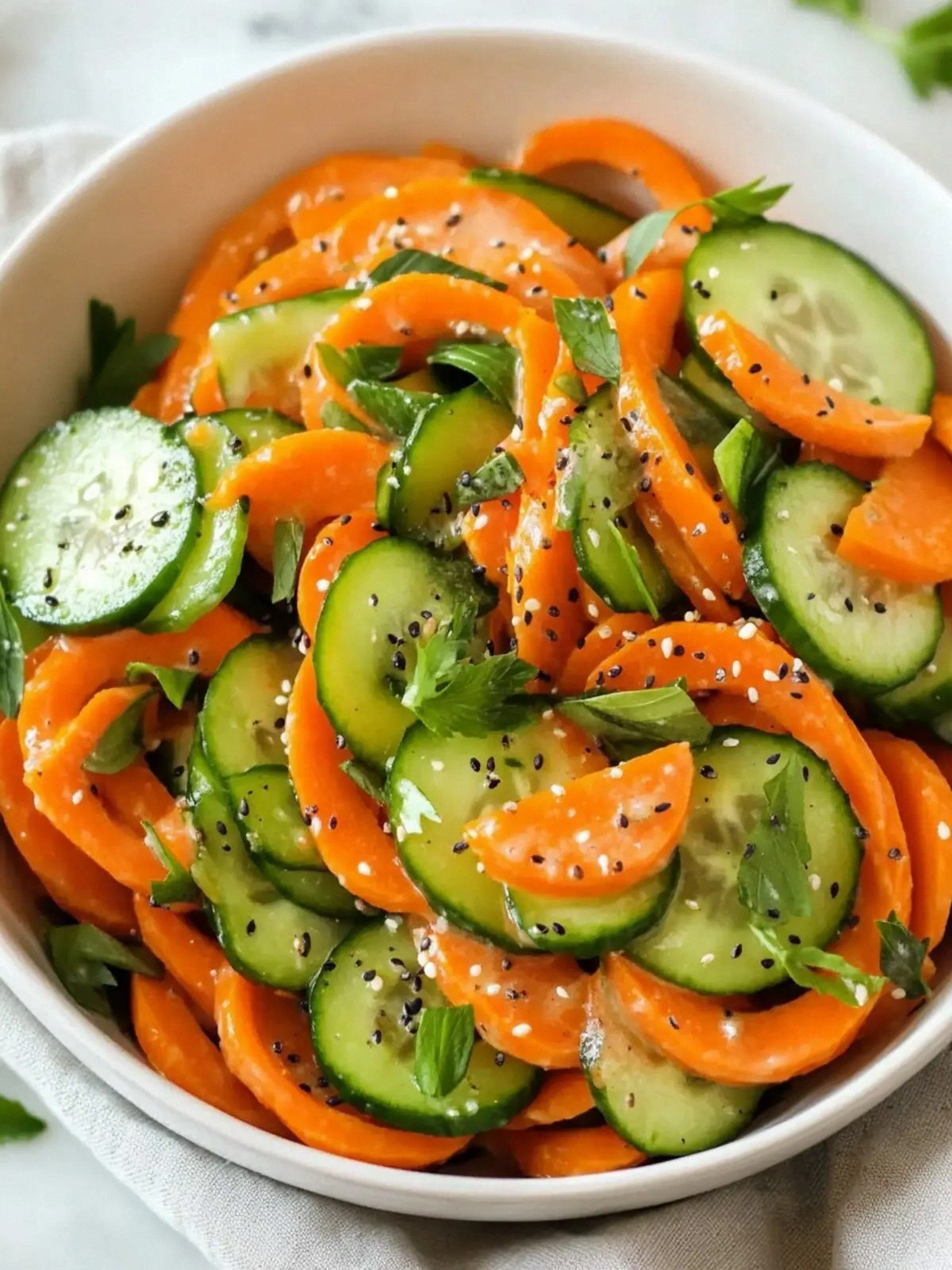
- Presentation: The vibrant green of the cucumber, the orange hue of the carrots, and the golden sesame seeds create a visually stunning dish that looks as good as it tastes. The bright colors will make your guests want to dig in before you even serve.
Inside the Ingredient List
The Flavor Base
The sauce is the heart of this salad, and each component plays a pivotal role. Low‑sodium soy sauce provides the umami foundation, but it’s the toasted sesame oil that adds a nutty aroma and depth. Honey balances the saltiness with a subtle sweetness that keeps the sauce from feeling too heavy. The Dijon mustard introduces a gentle heat and a silky texture that helps the sauce cling to the veggies. If you’re looking for a vegan version, you can replace the honey with maple syrup or agave nectar, but the flavor will shift slightly toward a more pronounced maple note.
The Texture Crew
Cucumbers and carrots are the primary texture contributors. The cucumber adds a cool, refreshing bite, while the carrots bring a subtle sweetness and a firm, satisfying crunch. The green onions contribute a sharp, almost citrusy note that brightens the dish. The sesame seeds add a nutty crunch that complements the vegetables, and the toasted sesame oil enhances the overall flavor profile. Skipping any of these ingredients will change the dish’s balance; for instance, omitting the sesame seeds will leave the salad feeling less complex.
The Unexpected Star
Toasted sesame oil might not be a staple in every kitchen, but it’s a game‑changer. The oil is made by toasting sesame seeds before oil extraction, giving it a deep, nutty aroma that’s impossible to replicate with regular sesame oil. If you can’t find it, a dash of toasted rice vinegar can mimic the nuttiness, but the flavor won’t be as robust. The oil also adds a glossy sheen to the dish, making it look as good as it tastes. A quick tip: toast the sesame seeds in a dry pan until they’re golden brown, then press them through a fine sieve to extract the oil.
The Final Flourish
The finishing touch is the sesame seeds. They’re not just decorative; they add a subtle crunch and a nutty flavor that ties the dish together. Sprinkle them over the salad right before serving to preserve their crunch. If you’re allergic to sesame, you can replace them with chopped toasted almonds or sunflower seeds for a different crunch profile. The seeds also provide a burst of healthy fats and protein, which helps keep you full and satisfied. The final flourish is the simple act of tossing everything together—no over‑mixing, just a gentle fold to coat the veggies evenly.
Everything’s prepped? Good. Let’s get into the real action and turn those ingredients into a dish that will have everyone asking for seconds.
The Method — Step by Step
- Prep the veggies: Wash the cucumber and carrots thoroughly, then cut them into matchsticks using a mandoline or sharp knife. Slice the green onions into thin rings. Set them aside on a clean towel to dry. The goal is uniform slices for even cooking and a consistent crunch. This step is crucial for achieving that perfect bite.
- Heat the pan: Place a large non‑stick skillet over medium‑high heat and add avocado oil. Let it heat until shimmering but not smoking. The oil should coat the bottom of the pan evenly. This ensures the veggies cook quickly and develop a golden crust. You’ll hear a faint sizzle as the oil warms.
- Sear the veggies: Add the cucumber and carrot sticks to the pan in a single layer. Let them cook undisturbed for 2-3 minutes until the edges start to crisp. Flip them gently and cook for another 2 minutes. The goal is a light sear that locks in moisture while giving the vegetables a crispy exterior. The aroma will be mouth‑watering.
- Season the veggies: Sprinkle a pinch of salt and pepper over the vegetables while they cook. This enhances the natural flavors and gives the dish a subtle depth. Don’t over‑salt; the low‑sodium soy sauce will provide the necessary saltiness. Taste as you go, adjusting the seasoning to your preference.
- Make the sauce: While the veggies are searing, whisk together low‑sodium soy sauce, rice vinegar, honey, Dijon mustard, and toasted sesame oil in a small bowl. The mixture should be smooth and glossy. If the sauce is too thick, add a splash of water to thin it out. The sauce should coat the vegetables without soaking them fully.
- Combine: Once the veggies are crisp, remove the pan from heat and transfer the vegetables to a large mixing bowl. Pour the sauce over the hot veggies and toss gently to coat. The heat from the vegetables will slightly caramelize the sauce, enhancing its sweetness. Be careful not to over‑toss; you want a light, even coating.
- Add the greens: Fold in the sliced green onions and sesame seeds. These add a bright, fresh contrast to the warm, savory veggies. Toss just enough to distribute the seeds evenly. The green onions will keep their crispness, adding a pop of color.
- Serve immediately: The salad is best served hot or at room temperature. If you’re plating for a crowd, arrange the veggies in a circular pattern, drizzle the sauce over the top, and sprinkle the sesame seeds for a finishing touch. The dish will look as vibrant as it tastes, drawing everyone in.
That’s it— you did it. But hold on, I’ve got a few more tricks that will take this to another level. These are the little details that separate a good salad from a legendary one.
Insider Tricks for Flawless Results
The Temperature Rule Nobody Follows
Heat is the secret sauce. Many people cook veggies on low heat, resulting in soggy results. I’ve found that medium‑high heat creates a golden crust that seals in moisture and gives that satisfying crunch. The pan should be hot enough that the oil shimmers, but not so hot that it smokes. If you notice the vegetables starting to brown too quickly, reduce the heat slightly. Consistency is key—aim for a gentle sizzle.
Why Your Nose Knows Best
The aroma of toasted sesame oil is a tell‑tale sign of quality. A fresh, nutty scent means the oil is at its peak flavor. If the oil smells flat or oily, it’s time to replace it. The same goes for the soy sauce—look for a deep, rich color and a balanced umami note. A cheap, flat soy sauce will make the dish taste like a budget salad.
The 5‑Minute Rest That Changes Everything
After you toss the veggies in the sauce, let them rest for five minutes before serving. This allows the flavors to meld and the sauce to thicken slightly. During this time, the vegetables will absorb the sauce’s sweetness, making each bite more flavorful. I’ve seen people skip this step and lose a layer of depth; don’t make the same mistake.
The Secret of Even Slices
Using a mandoline or a sharp knife ensures uniformity. Uneven slices cook at different rates, causing some pieces to be over‑cooked while others are under‑cooked. If you don’t have a mandoline, use a sharp knife and a cutting board with a groove to keep slices level. This simple trick will save you from uneven textures.
The Quick‑Freeze Trick for Extra Crunch
If you’re preparing the salad ahead of time, flash‑freeze the vegetables for a minute before searing. This technique keeps the veggies crisp even after reheating. The ice crystals help to lock in moisture, preventing the vegetables from becoming soggy. It’s a simple step that pays off big time.
Creative Twists and Variations
This recipe is a playground. Here are some of my favorite ways to switch things up:
Spicy Kimchi Kick
Add a handful of chopped kimchi to the mix for an extra layer of fermented flavor and heat. The kimchi’s tanginess pairs wonderfully with the sweet sauce, creating a complex palate. The crunch of the kimchi adds another textural dimension. This variation is perfect for those who love a spicy, umami‑rich bite.
Mediterranean Twist
Swap the low‑sodium soy sauce for a splash of extra‑virgin olive oil and a pinch of dried oregano. Add diced cherry tomatoes and a sprinkle of feta cheese for a Mediterranean vibe. The olive oil adds a fruity note, while the oregano brings herbal warmth. This version works great as a side for grilled lamb.
Protein Boost
Toss in some cooked shrimp, diced chicken, or tofu cubes for a hearty main dish. The protein will soak up the sauce, turning the salad into a filling meal. Use a quick stir‑fry for the protein to keep the dish cohesive. This variation is ideal for a quick dinner.
Crunchy Quinoa Layer
Mix cooked quinoa into the salad for an extra grainy texture and a protein boost. The quinoa will absorb the sauce, creating a cohesive dish. The nutty flavor of quinoa complements the sesame oil. This version works well for a wholesome lunch.
Ginger‑Garlic Zing
Add minced fresh ginger and a splash of minced garlic to the sauce for an aromatic lift. The ginger adds a bright, peppery note while the garlic brings depth. This variation is perfect for those who love a bold, savory flavor profile. It’s a quick way to elevate the dish.
Storing and Bringing It Back to Life
Fridge Storage
Store the salad in an airtight container in the refrigerator for up to 24 hours. The crunch remains crisp, and the sauce only becomes more flavorful as it sits. If you notice the veggies getting a bit soggy, add a paper towel to absorb excess moisture. When you’re ready to eat, give it a quick toss to redistribute the sauce.
Freezer Friendly
The salad can be frozen for up to 3 days, but it’s best served fresh. If you must freeze, wrap the salad tightly in plastic wrap and place it in a freezer bag. Thaw in the refrigerator overnight, then give it a quick stir before serving. The crunch might be slightly softer, but the flavor remains intact.
Best Reheating Method
If you’re reheating the salad, do so gently in a skillet over low heat, adding a splash of water to keep it from drying out. The water creates steam, restoring moisture and crispness. Avoid microwaving, as it will make the veggies soggy. Reheat just until the vegetables are warmed through and the sauce is silky.