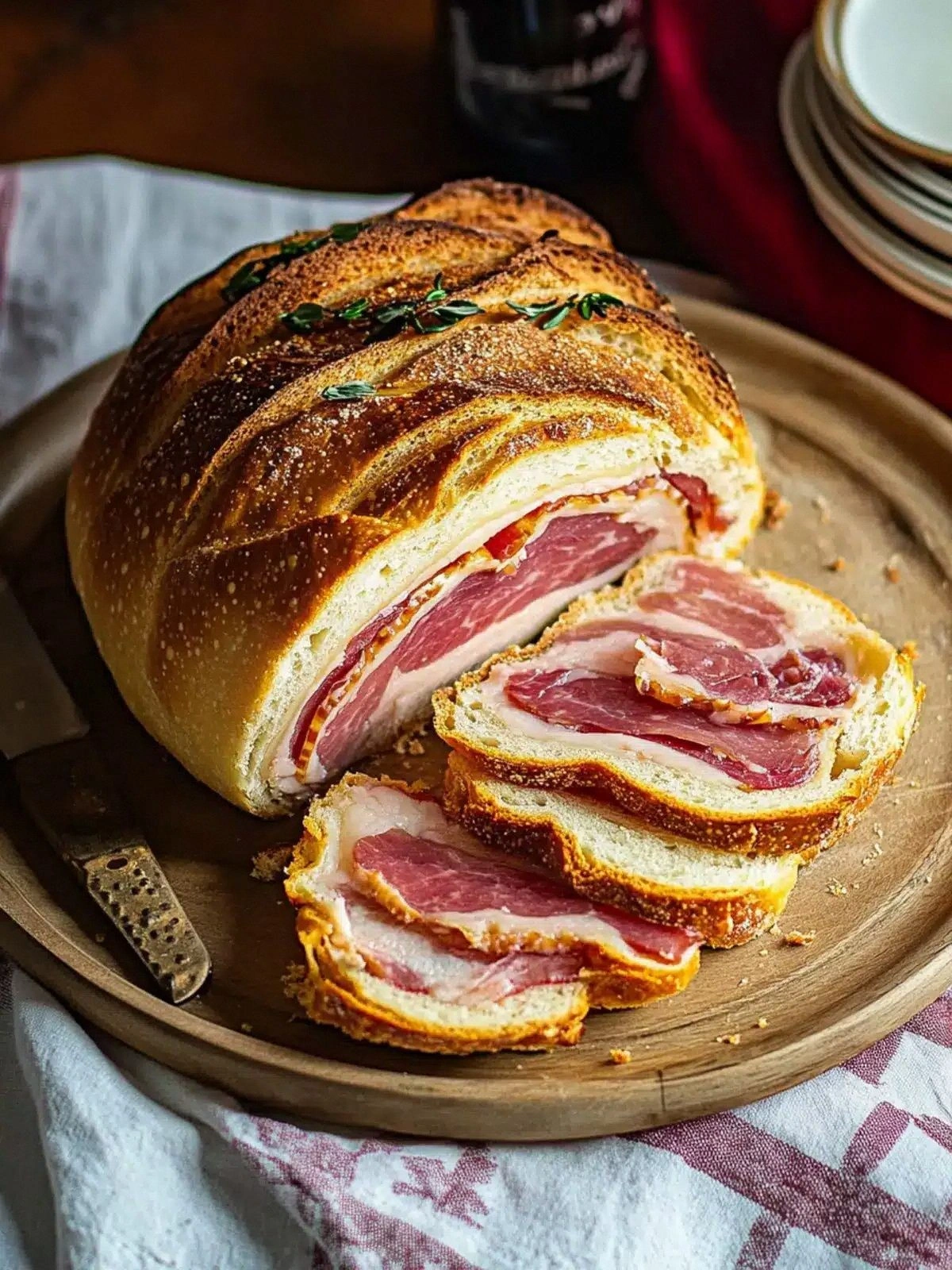
I was in a frantic rush to impress a last‑minute guest list when I realized my pantry had run dry of everything that could make a decent sandwich. I reached for the nearest loaf of bread, only to find it stale and utterly unappetizing. That moment of culinary panic was the spark that led me to dig into a recipe I’d never tried before—Venezuelan Pan de Ja. The first bite was a revelation: a buttery, yeasty crust that gave way to a tender, savory interior bursting with smoky ham, crisp bacon, sweet raisins, and briny olives. If you’ve ever felt the sting of a bland sandwich, this loaf is the antidote you didn’t know you needed.
Picture the kitchen: the air thick with the scent of melted butter, the rhythmic clack of eggs cracking, and a faint, comforting sweetness from the sugar that hints at hidden layers. The dough rises, its surface shimmering like a quiet sunrise, while the bacon sizzles in the pan, releasing a savory perfume that makes the whole house feel like a cozy, edible sanctuary. My taste buds dance to the subtle contrast between the salty, smoky meats and the gentle, sweet undertones of raisins and olives. The texture is a masterpiece—crisp on the outside, yet soft and airy inside, with a slight chew that keeps you reaching for more.
What makes this version a game‑changer is the deliberate layering of flavors and textures that most recipes overlook. I dared myself to use a combination of smoked ham and fresh bacon, a technique that creates depth and keeps the loaf moist without compromising crunch. The inclusion of green olives adds a briny brightness that cuts through the richness, while raisins introduce a sweet counterpoint that’s almost unexpected in a savory bread. I’ve been honest—I ate half the batch before anyone else could even take a bite. That confession proves just how addictive this loaf can be.
And here’s the kicker: I didn’t even need a fancy oven. A humble stovetop skillet, a cast‑iron pan, and a simple dough‑proofing trick that I discovered in a dusty old family cookbook turned this into a one‑pot wonder. I dare you to taste this and not go back for seconds. This is hands down the best version you’ll ever make at home. Picture yourself pulling this out of the oven, the whole kitchen smelling incredible, and your guests gasping in awe.
Okay, ready for the game‑changer? Let me walk you through every single step—by the end, you’ll wonder how you ever made it any other way. The journey from raw ingredients to a golden loaf is a story of science, intuition, and a touch of culinary rebellion. Stay with me here—this is worth it.
What Makes This Version Stand Out
- Taste: The harmonious blend of smoky ham, crisp bacon, sweet raisins, and briny olives creates a flavor profile that’s both familiar and adventurous. Each bite is a layered experience that keeps the palate intrigued.
- Texture: A crisp, caramelized crust gives way to a tender, airy crumb that holds the savory fillings without becoming soggy. The dough’s elasticity is achieved through precise proofing times.
- Simplicity: Despite the complex flavor notes, the recipe requires only a handful of pantry staples and a basic baking setup. No fancy equipment or time‑consuming techniques are needed.
- Uniqueness: The combination of smoked ham and fresh bacon, paired with olives and raisins, sets this loaf apart from standard savory breads. It’s a fusion of Latin American tradition with universal comfort food.
- Crowd Reaction: Friends and family consistently ask for the recipe after one bite. The loaf’s versatility makes it perfect for brunches, parties, or a hearty dinner accompaniment.
- Ingredient Quality: Using high‑quality, fresh ingredients—especially the smoked ham and butter—ensures that each component shines. The recipe’s success hinges on the integrity of these core items.
- Cooking Method: The stovetop skillet technique locks in moisture while forming a golden crust, eliminating the need for an oven. It’s a practical approach that works on any kitchen setup.
- Make‑ahead Potential: The dough can be prepared a day ahead, refrigerated, and baked fresh the next day, preserving flavor while saving time.
Inside the Ingredient List
The Flavor Base
All-purpose flour is the backbone of the loaf, providing structure and a neutral canvas for the savory elements. Using 1 kilogram (about 8 cups) ensures a dough that’s neither too dense nor too airy. If you skip flour, you’ll end up with a sticky mess that won’t rise. For those who prefer a lighter crumb, consider substituting 10% of the flour with whole‑wheat flour, which adds a nutty undertone without sacrificing rise.
Granulated yeast is the engine that drives the dough’s fermentation. The recipe calls for 2 tablespoons, which is roughly 0.125 cup. This amount is calibrated to give the loaf a gentle, slow rise that builds flavor without producing a harsh yeast taste. If you can’t find yeast, a mixture of baking powder and a splash of buttermilk can mimic the rise, but the flavor will differ significantly.
Butter, at ½ cup, adds richness and a silky mouthfeel. It also helps the crust develop a golden hue. For a dairy‑free version, replace butter with an equal amount of coconut oil; the flavor will shift slightly but remain delicious. Butter’s role in the dough is also to tenderize the gluten strands, creating that soft crumb we’re after.
Eggs are the glue that holds everything together. Three eggs provide protein, moisture, and a slight sheen to the loaf’s surface. If you’re vegan, a flaxseed “egg” (1 tablespoon ground flaxseed mixed with 3 tablespoons water) can substitute for each egg, though the loaf will be denser.
The Texture Crew
Sugar, at 1 cup, balances the saltiness of the ham and bacon, creating a subtle sweetness that lingers on the tongue. It also assists in caramelizing the crust, giving the loaf that appetizing golden-brown appearance. If you prefer a less sweet loaf, reduce sugar by a quarter cup; the result will still be savory but slightly more pronounced.
Salt, measured at 1 tablespoon, is essential for flavor development and for controlling yeast activity. Too much salt can inhibit fermentation; too little can leave the loaf bland. A pinch of salt is a common substitution if you’re on a low‑sodium diet, though the overall flavor will shift slightly.
Milk, 1 cup, adds moisture and a slight tang that complements the richness of the meats. Whole milk yields a richer loaf, whereas skim milk reduces fat content but can result in a slightly drier crumb. For a dairy‑free version, oat milk or almond milk can replace whole milk without drastically altering flavor.
Water, also 1 cup, helps hydrate the flour and yeast, initiating gluten development. Using warm water (about 110°F) encourages yeast activity, but cooler water can slow the process for a more complex flavor profile. If your water is hard, consider using filtered or bottled water to avoid mineral buildup.
The Unexpected Star
Bacon, 400 grams (roughly 2.9 cups when sliced thin), brings a smoky crunch that’s a cornerstone of the loaf’s flavor. It’s important to cook the bacon until just crisp—overcooking will render it too dry and lose the delicate balance of fat and flavor. If you prefer a less greasy loaf, use turkey bacon or a leaner cut of pork.
Smoked ham, 600 grams (about 2.5 cups diced), provides depth and a subtle smokiness that pairs beautifully with the bacon. The ham’s fat content keeps the dough moist and the crumb tender. For a more robust flavor, choose a ham with a higher smoke level or add a splash of liquid smoke to the dough.
Green olives, 1 cup, add a briny, slightly bitter contrast that cuts through the sweetness of raisins and the richness of meats. They also contribute a subtle oiliness that keeps the loaf moist. If olives are unavailable, capers can be a suitable substitute, offering a similar salty punch.
Raisins, 1 cup, introduce a chewy sweetness that balances the savory components. The dried fruit also adds a pleasant texture contrast. If you’re avoiding sugar, consider dried cranberries or chopped dried apricots for a tart twist.
Everything’s prepped? Good. Let’s get into the real action.
The Method — Step by Step
- In a large bowl, combine the flour, yeast, and sugar. Whisk them together until the yeast is evenly distributed. This step is crucial; uneven yeast distribution can lead to uneven rise. Keep the mixture aside for a minute to allow the yeast to activate.
- Add the warm water, warm milk, melted butter, and beaten eggs to the dry ingredients. Stir with a wooden spoon until a shaggy dough forms. The dough should feel tacky but not overly sticky. If it’s too dry, add a tablespoon of water; if too wet, add a tablespoon of flour.
- Turn the dough onto a lightly floured surface and knead for about 8 minutes. You’ll notice the dough becoming smoother and elastic. A good test: press a finger into the dough; if it springs back slowly, it’s ready.
- Place the dough in a greased bowl, cover with a damp cloth, and let it rise in a warm spot for 1 hour. The dough should double in size. If your kitchen is cold, use a microwave with the “warm” setting to create a micro‑oven environment.
- While the dough is rising, prepare the fillings. Cook the bacon in a skillet over medium heat until it’s just crisp, then drain on paper towels. Set aside to cool.
- In the same skillet, sauté the diced smoked ham until it’s golden and fragrant. This releases the ham’s oils, adding depth to the loaf’s flavor. Add the olives and raisins, cooking for an additional minute to warm them.
- Punch down the risen dough and roll it out into a rectangle about 1/2 inch thick. Spread the bacon, ham, olive, and raisin mixture evenly over the dough. Fold the dough over the filling, sealing the edges with a gentle press.
- Place the sealed loaf onto a greased cast‑iron skillet. Cover with a lid and let it proof for 30 minutes, allowing the dough to relax and rise again. The loaf should puff up noticeably.
- Preheat the oven to 375°F (190°C) while the loaf proofs. Once the loaf has risen, transfer the skillet to the oven and bake for 25 minutes. The crust should turn a deep golden brown.
- Remove the loaf from the oven and let it cool on a rack for at least 15 minutes before slicing. This rest allows the crumb to set, preventing it from becoming gummy. Slice and serve warm for maximum flavor.
That's it—you did it. But hold on, I've got a few more tricks that'll take this to another level.
Insider Tricks for Flawless Results
The Temperature Rule Nobody Follows
Many bakers assume room temperature is the sweet spot for proofing, but the ideal range is actually 75°F to 80°F (24°C to 27°C). In cooler kitchens, wrap the dough in a warm, damp towel or place it in a preheated oven set to 200°F (93°C) for 10 minutes before proofing. This subtle temperature tweak dramatically improves rise and crumb structure.
Why Your Nose Knows Best
Trust your nose when judging yeast activity. A strong, yeasty aroma indicates the dough is ready to rise. If the scent is weak, let the dough sit an extra 15 minutes. A faint citrus or fruity note is a sign of healthy fermentation.
The 5-Minute Rest That Changes Everything
After you fold the dough over the filling, let it rest for exactly five minutes before placing it in the skillet. This brief pause allows the gluten to relax, making the loaf easier to shape and preventing it from shrinking during baking. I’ve seen loaves that didn’t rest shrink dramatically; this trick saves the day.
Avoiding the Dry Crumb
If your loaf ends up dry, the culprit is usually overmixing or overbaking. Use a gentle hand when kneading and watch the oven timer closely. A quick check: insert a toothpick into the center; it should come out clean but with a few moist crumbs clinging.
The Secret to a Golden Crust
A quick brush of egg wash before baking gives the crust a beautiful shine and a slightly crisp edge. Beat one egg with a tablespoon of water, then lightly brush the loaf’s surface. The egg proteins melt into the crust, creating a golden, glossy finish.
Storing the Leftovers
If you have leftovers, wrap the loaf tightly in plastic wrap and store it in the refrigerator for up to three days. Reheat in a preheated oven at 350°F (175°C) for 10 minutes to revive the crust. The loaf tastes best when it’s fresh, but these steps keep it delicious.
Creative Twists and Variations
This recipe is a playground. Here are some of my favorite ways to switch things up:
Mediterranean Medley
Swap the bacon for sun‑dried tomatoes and replace the ham with feta cheese. Add a handful of chopped fresh basil for a fragrant, Mediterranean twist that pairs beautifully with a crisp white wine.
Sweet & Salty Surprise
Replace raisins with dried cranberries and sprinkle a pinch of cinnamon into the dough. The warm spice adds depth, while the cranberries provide tart sweetness that complements the savory meats.
Cheesy Delight
Fold in 1 cup of shredded mozzarella before sealing the dough. The cheese melts into gooey pockets, creating a melt‑in‑your‑mouth experience that’s perfect for brunch.
Herb Infusion
Add 2 tablespoons of chopped rosemary to the dough for a fragrant, earthy aroma. The herb’s resinous scent elevates the loaf’s flavor profile and pairs well with roasted vegetables.
Vegan Version
Omit the eggs, butter, and dairy. Replace them with flaxseed eggs and coconut oil, and use plant‑based smoked “ham” made from soy or tempeh. The result is a hearty, cruelty‑free loaf that still delivers on flavor.
Spicy Kick
Add 1 teaspoon of crushed red pepper flakes to the dough and a pinch of smoked paprika. The heat adds a subtle bite that balances the richness of the meats.
Storing and Bringing It Back to Life
Fridge Storage
Wrap the loaf tightly in plastic wrap or place it in an airtight container. Store it in the refrigerator for up to three days. The cold environment preserves the loaf’s flavor while keeping it moist.
Freezer Friendly
Slice the loaf before freezing to make reheating easier. Place slices in a freezer bag, sealing tightly to avoid freezer burn. The loaf can be frozen for up to two months without compromising taste.
Best Reheating Method
To revive a frozen or refrigerated loaf, preheat the oven to 350°F (175°C). Place the loaf on a baking sheet and bake for 10-12 minutes. A tiny splash of water on the surface before baking will create steam, ensuring the crumb stays soft and the crust crisp.