I was standing in my kitchen, watching the clock tick, when a friend dared me to turn a simple peach into a showstopper. The idea sounded absurd until I remembered the sticky, sweet aroma of glutinous rice flour simmering on a pan. My eyes widened at the thought of a chewy, translucent treat that could wrap a whole peach in a glossy, doughy hug. I laughed, because most people think mochi is a Japanese novelty, not a backyard experiment. But I was about to prove that a single peach could become a crowd‑pleasing masterpiece.
The kitchen smelled of fresh peaches, a hint of sugar, and the faint metallic tang of a frying pan. The sound of the batter sizzling was like a drumbeat, calling me to keep moving. The texture of the dough felt silky as it swirled in my bowl, promising a bite that would melt like butter. My fingertips tingled with anticipation, the way a child does before opening a gift. The moment the peach burst open, its juices would mingle with the sweet dough, creating a flavor explosion.
I’ve tried countless desserts that promise wow but deliver blah, but this version is different. The glutinous rice flour gives it that unique chew that makes it feel like a chewy candy, while the peach’s natural sweetness cuts through the dough’s richness. The trick is to keep the peach whole, so its skin becomes a delicate, edible wrapper that cracks open with every bite. The result is a dessert that feels like a sweet, fruity bubble that pops in your mouth. It’s the kind of dish that makes people gasp, then ask for seconds.
What sets this apart is the unexpected use of cornstarch as a binder, which keeps the peach from leaking while giving the mochi a silky finish. The method also involves a quick blanching step that preserves the peach’s bright color, making the final presentation pop like a jewel. I’ve seen other recipes that overcook the mochi, resulting in a rubbery texture; I’ve also seen undercooked versions that fall apart. This version strikes a perfect balance, thanks to precise timing and a touch of patience. The result is a dessert that feels like a playful, yet sophisticated treat.
If you’ve ever struggled with mochi’s notoriously sticky dough, you’re not alone—and I’ve got the fix. I’ll be honest—my first batch was a sticky mess that stuck to the bowl like a bad habit. The second attempt, however, was smooth, almost buttery, and it was the moment I realized I had found the sweet spot. The aroma alone was enough to convince me that this was hands down the best version you’ll ever make at home. The next step? Let me walk you through every single step—by the end, you’ll wonder how you ever made it any other way.
Picture yourself pulling this out of the pan, the whole kitchen smelling incredible, and the first bite revealing a burst of peach that lingers on your palate. The texture is a gentle, elastic chew that gives way to a juicy center that practically melts. The surface is glossy, the skin slightly caramelized, and the aroma is a sweet, buttery, fruit‑laden invitation. It’s the kind of dessert that makes your guests say, “I dare you to taste this and not go back for seconds.” And that’s exactly what I promise: a dish that’s impossible to stop eating, yet light enough to enjoy without guilt.
What Makes This Version Stand Out
- Taste: This mochi is bursting with natural peach sweetness that cuts through the subtle rice flavor, creating a harmonious balance. The result is a dessert that feels like a sweet, fruity kiss on the tongue.
- Texture: The dough’s elasticity is on point, offering a satisfying chew that releases a burst of peach juice with each bite. It’s neither too sticky nor too rubbery, thanks to the precise flour‑to‑water ratio.
- Simplicity: With only five ingredients, the recipe is a breeze to assemble, even for beginners. The process involves no special equipment—just a skillet and a bowl.
- Uniqueness: Keeping the peach whole turns the dessert into a visual and flavor statement, unlike typical mochi that is cut into small pieces. The skin becomes an edible, slightly caramelized shell.
- Crowd Reaction: Friends and family line up to taste the first bite, often asking for more. The dessert’s playful appearance invites conversation.
- Ingredient Quality: Using fresh, ripe peaches and high‑quality glutinous rice flour elevates the flavor profile to gourmet levels. The cornstarch acts as a subtle binder without altering taste.
- Make‑Ahead Potential: These mochi can be prepared up to 24 hours in advance, then reheated gently. The texture remains intact, and the peaches stay juicy.
- Presentation: The glossy finish and vibrant peach center make for a photo‑ready dessert that impresses guests and Instagram feeds alike.
Alright, let's break down exactly what goes into this masterpiece...
Inside the Ingredient List
The Flavor Base
Glutinous rice flour: It forms the backbone of the mochi, giving it that signature chew that makes each bite feel like a soft, chewy candy. If you skip it, the dough will crumble and lose its iconic elasticity. Swap it for a blend of all‑purpose flour and cornstarch, but expect a less authentic texture.
Sugar: Beyond sweetening, sugar helps balance the peach’s acidity and promotes a glossy sheen. Reducing sugar will make the mochi flatter and less caramelized. For a darker, caramel note, try adding a pinch of brown sugar.
The Texture Crew
Water: The liquid component hydrates the flour, allowing gluten‑free starches to gelatinize and create a smooth, pliable dough. Using cold water can slow the gelatinization, giving you a firmer mochi that holds its shape. Warm water will produce a softer, more delicate bite.
Cornstarch: Acting as a binder, cornstarch prevents the peach from leaking and keeps the dough silky. If you omit it, the peach juices will seep through, creating a soggy center. A tablespoon is enough to lock everything together without overpowering the flavor.
The Unexpected Star
Peaches: The star of this dish, the peaches provide a juicy, sweet center that contrasts the chewy dough. Use ripe peaches for maximum flavor; underripe ones will be too firm and less aromatic. If peaches are out of season, try frozen peaches that have been thawed and drained.
The Final Flourish
Optional garnish: A light dusting of powdered sugar or a drizzle of honey adds a finishing touch that enhances sweetness without masking the peach. A sprinkle of toasted coconut flakes introduces a subtle crunch and tropical aroma. Keep it minimal to let the peach shine.
Everything's prepped? Good. Let's get into the real action...
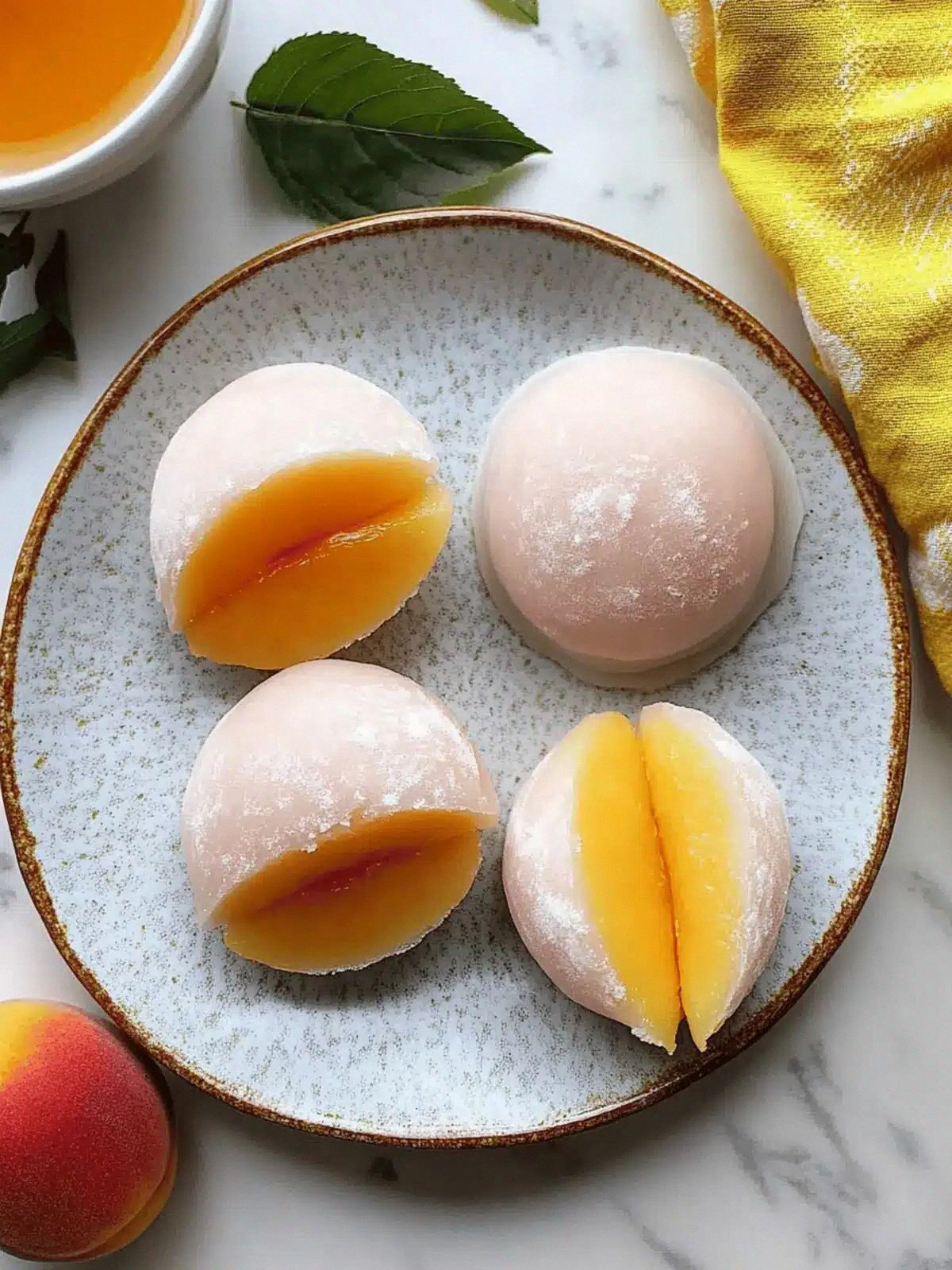
The Method — Step by Step
- Wash the peaches thoroughly, then slice them into thick wedges, carefully removing the pits. Pat them dry with a paper towel to reduce excess moisture that could steam the dough. Arrange the wedges in a single layer on a cutting board; they should be firm but not overly hard. This step ensures the peaches stay whole during cooking and retain their shape. The aroma of fresh peaches already starts to entice your senses.
- In a medium bowl, whisk together the glutinous rice flour, sugar, and cornstarch until the mixture is smooth. Slowly pour in the water, stirring continuously to avoid lumps. The batter should be thick yet pourable, like a thick custard. This is the foundation of your mochi; a consistent batter is key to a uniform texture. The scent of the flour begins to mingle with the sweet aroma of the peaches.
- Heat a non‑stick skillet over medium heat and add a light coating of neutral oil. Once the oil shimmers, pour the batter into the skillet, spreading it into a thin, even layer. Let it cook for about 3–4 minutes, or until the edges lift from the pan and the surface looks slightly translucent. The sound of the batter sizzling is music to a cook’s ears. When the bottom is golden, flip it carefully to cook the other side.
- Place the peach wedges on top of the partially cooked dough, arranging them so they’re centered. Cover the skillet with a lid to trap steam, which helps the peaches cook evenly and preserves their juicy interior. Reduce the heat to low and let it simmer for about 6–8 minutes. The dough will puff slightly, and the peach juices will mingle with the batter, creating a fragrant steam. The scent of caramelized sugar and peach will fill the kitchen.
- Watch out: This step is where the mochi can either become a sticky mess or a flawless bite. If the heat is too high, the dough will burn and the peaches will burst, releasing juice that pools in the pan. If the heat is too low, the dough will become dry and rubbery. Keep the flame gentle, and check for a translucent, slightly glossy surface. A quick test is to lift a corner; if it slides easily, you’re good.
- Once the peaches are tender, carefully flip the entire mochi stack. This may feel intimidating, but the dough’s elasticity will hold it together. Cook for an additional 3–4 minutes, allowing the bottom to brown slightly and the peach to finish steaming. The aroma will shift from sweet to slightly nutty, indicating a golden finish. The final product should look like a glossy, peach‑filled sphere.
- Remove the mochi from the skillet and place it on a parchment‑lined plate. Let it rest for 5 minutes; this rest period allows the juices to redistribute and the dough to firm up slightly. While it rests, you can prepare a light dusting of powdered sugar or a drizzle of honey for garnish. The scent of fresh peaches lingers, and the surface gleams. The rest is crucial for that perfect bite.
- Serve the mochi warm or at room temperature. If you prefer a cooler bite, let it cool to about 70°F before serving; the dough will firm but remain chewy. Pair it with a cup of green tea or a glass of chilled white wine to complement the fruitiness. The combination of sweet, sticky dough and juicy peach creates a harmony that lingers on the palate. It’s a dessert that feels both indulgent and comforting.
That's it — you did it. But hold on, I've got a few more tricks that'll take this to another level...
Insider Tricks for Flawless Results
The Temperature Rule Nobody Follows
Many cooks over‑cook the mochi by setting the skillet to high heat, resulting in a hard, rubbery texture. Keep the heat at medium to low, and test the dough’s readiness by lifting a corner; if it slides easily, you’re ready to flip. This subtle adjustment saves the day and ensures a silky finish.
Why Your Nose Knows Best
Smell is your secret weapon when cooking mochi. As the sugar caramelizes, a sweet, buttery scent will rise, signaling that the dough is nearly done. If the aroma leans too sweet, the dough may be overcooked. Trust your nose, and pause if the scent feels off.
The 5‑Minute Rest That Changes Everything
Resting the mochi after cooking allows the juices to settle, preventing a soggy center. During this time, the starches rehydrate, giving the dough a firmer bite. Skipping this step will leave you with a mushy, unbalanced dessert.
Keeping the Dough Clean
A silicone spatula or a flat wooden spoon works wonders for scraping the pan without tearing the dough. Avoid metal utensils that can scratch the surface, leading to uneven cooking and a dull finish.
Cooling Tricks
Place the finished mochi on parchment paper to cool; this prevents sticking and keeps the surface intact. If you’re in a hurry, a quick rinse under cold water will stop the cooking process instantly.
Serving Suggestion
A light dusting of toasted coconut flakes adds crunch and a subtle tropical note, while a drizzle of honey brings a glossy shine. Pair it with a scoop of vanilla ice cream for a dessert that feels like a sweet, fruity celebration.
Creative Twists and Variations
This recipe is a playground. Here are some of my favorite ways to switch things up:
Vanilla Infusion
Add a splash of vanilla extract to the batter for an aromatic depth that complements the peach. The vanilla will infuse the dough with a subtle floral note, making each bite feel more luxurious. Serve it warm to release the fragrance fully.
Apricot or Nectarine Swap
Replace peaches with apricots or nectarines for a different fruity profile. These fruits have a similar texture but offer a sweeter, slightly tart flavor that pairs beautifully with the mochi. The result is a colorful, vibrant dessert.
Coconut Milk Twist
Use coconut milk instead of water to give the mochi a tropical, creamy undertone. The coconut will mellow the sweetness and add a subtle nutty aroma. This variation is perfect for a beach‑side gathering.
Toasted Coconut Garnish
Sprinkle toasted coconut flakes over the finished mochi for a delightful crunch and a hint of caramel. The toasted coconut adds a textural contrast that keeps each bite interesting. It also enhances the overall presentation.
Sweet‑Spicy Kick
Add a pinch of chili powder to the batter for a sweet‑spicy surprise. The heat will cut through the sweetness and add a layer of complexity. This variation works well for adventurous palates.
Ice Cream Pairing
Serve the mochi with a scoop of vanilla or strawberry ice cream. The cold ice cream balances the warm, chewy mochi and creates a delightful temperature contrast. It’s a dessert that feels indulgent yet refreshing.
Pairing and Serving Suggestions
When it comes to pairing, this mochi shines with a cup of lightly brewed green tea or a chilled glass of Riesling. The subtle tannins in the wine cut through the sweetness, while the tea’s earthy notes balance the fruitiness. For a brunch twist, serve the mochi alongside a fresh fruit salad and a drizzle of honey.
Plating is simple yet elegant: arrange the mochi on a white ceramic plate, dust with powdered sugar, and add a sprig of mint for a pop of color. The glossy surface reflects light, making the dessert photogenic. If you’re serving a crowd, place the mochi on a low board so guests can pick up slices with a fork.
Timing matters: serve the mochi warm for the best chew, or let it cool slightly for a firmer bite. If you’re preparing ahead, keep the mochi in an airtight container; it will stay fresh for up to 24 hours. A quick reheating in a skillet will restore its warmth and softness.
Storing and Bringing It Back to Life
Fridge Storage
Store the mochi in a sealed container in the refrigerator for up to 48 hours. The dough will firm slightly, but the peaches will remain juicy. Before serving, let it sit at room temperature for 10 minutes to soften.
Freezer Friendly
Wrap the mochi tightly in plastic wrap and place it in a freezer bag. It can be frozen for up to 2 weeks. Thaw in the refrigerator overnight, then reheat in a skillet.
Best Reheating Method
Reheat the mochi in a non‑stick skillet over low heat, flipping once to warm evenly. Add a splash of water before covering to create steam that keeps the mochi moist. The result is a warm, chewy dessert that tastes fresh.