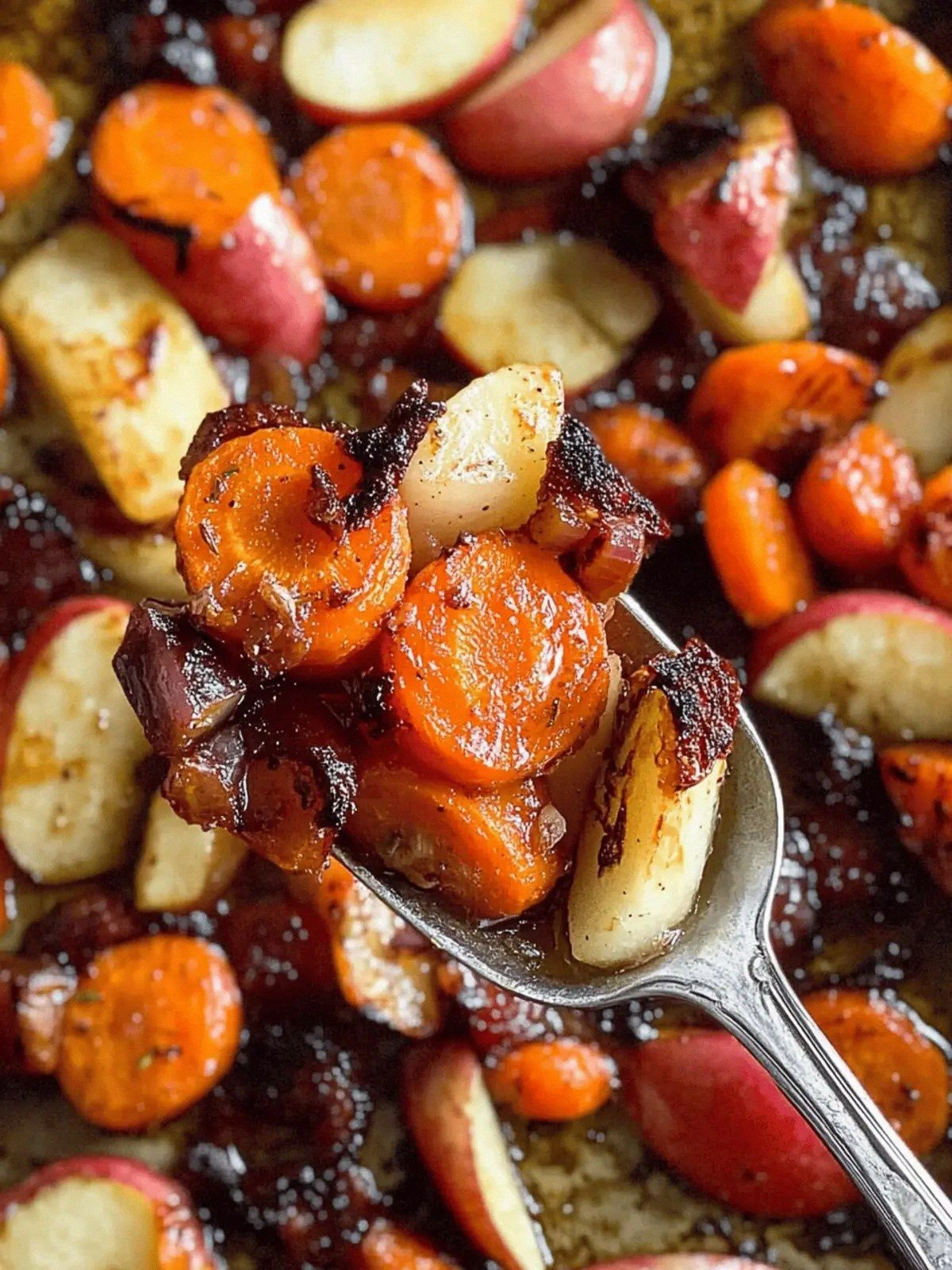
I was determined to create a side that would make the rest of the family ask for seconds—yes, even the kids. The moment the carrots hit the oven, the kitchen filled with a caramelized aroma that made my eyes water just from anticipation. I could already hear the crunch of the edges as they browned, the gentle hiss of maple syrup caramelizing, and the faint pop of onions releasing their sweetness. The sound alone was a promise of texture—soft inside, crisp outside, and that subtle, buttery glaze that would make each bite feel like a hug.
What sets this version apart is that it marries the earthiness of carrots with the bright tang of Dijon, all wrapped in a glossy maple glaze. No bland roasting, no overcooked sweetness; this dish balances the heat of mustard with the mellow sweetness of maple syrup, creating a flavor profile that sings. I dare you to taste this and not go back for seconds. The contrast between the caramelized exterior and the tender interior will leave you wondering how you ever made carrots any other way.
And here’s the twist that makes this recipe unforgettable: I added apples for a natural sweetness and a hint of tartness that cuts through the richness. The apples caramelize alongside the carrots, releasing a subtle fruitiness that lingers on the palate. Picture yourself pulling this out of the oven, the whole kitchen smelling incredible, and the table already buzzing with anticipation. Let me walk you through every single step—by the end, you’ll wonder how you ever made it any other way.
What Makes This Version Stand Out
- Taste: The marriage of Dijon mustard and maple syrup creates a complex flavor that’s simultaneously sweet, tangy, and savory, turning a humble side into a showstopper.
- Texture: The roasting process yields a caramelized crust that cracks like thin ice, while the inside remains silky and tender—an irresistible contrast.
- Ingredient Quality: Using fresh, organic carrots and crisp apples elevates the dish; the difference in quality is palpable in every bite.
- Simultaneous Sweetness: Apples add natural sweetness, reducing the need for added sugar while keeping the glaze glossy.
- Crowd Reaction: Friends who’ve tasted this say it’s “hands down the best version you'll ever make at home.”
- Make‑ahead Potential: Once roasted, the dish can be stored and reheated without losing its crunch, making it perfect for busy weeknights.
Inside the Ingredient List
The Flavor Base
The foundation of this dish starts with a simple yet powerful blend: olive oil, maple syrup, and Dijon mustard. Olive oil acts as the carrier, ensuring every piece of carrot and apple gets a glossy coating. Maple syrup is the sweet hero that caramelizes into a caramel-like glaze, while Dijon mustard adds a piquant kick that cuts through the sweetness. Skipping any of these would leave the dish feeling flat; together they create a symphony of flavor.
The Texture Crew
Carrots and apples are the main players here. Carrots bring earthy sweetness and a firm bite that holds up under roasting. Apples, especially firm varieties like Honeycrisp or Fuji, add a juicy burst and a subtle tartness that balances the maple glaze. If you prefer a softer texture, consider cutting the carrots into smaller pieces; otherwise, the larger chunks keep the dish hearty.
The Unexpected Star
Garlic and onion are the unsung heroes that add depth. Freshly minced garlic infuses a warm, aromatic warmth that permeates the dish, while diced onion provides a subtle sweetness that complements the maple. If you’re sensitive to garlic, try roasting it separately and then mixing it in, or use a garlic-infused oil to maintain the flavor without the bite.
The Final Flourish
Seasoning is where the dish truly shines. A pinch of salt and black pepper enhance the natural sweetness of the carrots and apples, while a teaspoon of thyme adds a herbal note that anchors the flavors. Thyme’s earthy aroma elevates the dish, giving it a sophisticated finish. If you’re adventurous, a sprinkle of smoked paprika can add a subtle smokiness that pairs wonderfully with the maple glaze.
Everything's prepped? Good. Let’s get into the real action.
The Method — Step by Step
- Preheat your oven to 425°F (220°C). Line a large baking sheet with parchment paper or a silicone mat to prevent sticking. The high temperature is key for caramelizing the natural sugars in the carrots and apples. I’ve found that a clean sheet helps the edges crisp up beautifully.
- While the oven heats, peel and slice the carrots into 1/2-inch thick rounds. Peel the apples and core them, then slice into wedges about the same thickness. The uniform size ensures even cooking. I like to use a mandoline for precision, but a sharp knife works just fine.
- In a large bowl, whisk together 1/4 cup olive oil, 1/4 cup maple syrup, and 3 tablespoons Dijon mustard until fully blended. Add 1/2 teaspoon salt, 1/2 teaspoon black pepper, and 1 teaspoon thyme. Toss the sliced carrots and apples in the mixture until every piece is coated. The glaze should cling to each piece like a glossy coat.
- Add 5 minced garlic cloves and 1 diced onion to the bowl. Mix again to distribute the aromatics evenly. The garlic’s warmth will permeate the dish, while the onion adds a subtle sweetness. I always taste the mixture before roasting to ensure the seasoning is balanced.
- Spread the coated vegetables in a single layer on the prepared baking sheet. Avoid overcrowding; this ensures each piece gets a chance to crisp up. Place the sheet on the middle rack to allow even heat circulation.
- Roast for 25 minutes, stirring halfway through. The carrots should start to turn golden, and the edges will begin pulling away, giving a crisp texture. The apple wedges should be slightly softened but still hold their shape. Keep an eye on them; the maple glaze can burn if left too long.
- When the vegetables are done, remove the sheet and transfer the carrots and apples to a serving platter. Drizzle any remaining glaze from the pan over the top for extra shine. The final touch is a sprinkle of fresh thyme leaves for a burst of color.
- Serve immediately while hot and crispy. Pair with a protein like roasted chicken or a simple grilled steak for a balanced meal. I like to add a squeeze of fresh lemon juice to cut through the sweetness, but it’s optional.
That’s it — you did it. But hold on, I've got a few more tricks that'll take this to another level. These insider tips will help you perfect the dish every single time.
Insider Tricks for Flawless Results
The Temperature Rule Nobody Follows
Most people roast at a moderate temperature, but 425°F is the sweet spot for caramelization without burning. The high heat caramelizes the sugars quickly, creating that glossy glaze. If you’re using a convection oven, lower the temperature by 25°F to avoid over‑browning. This trick ensures the edges stay crisp while the interior stays tender.
Why Your Nose Knows Best
The scent of caramelizing maple is a natural indicator of readiness. When you smell the sweet, buttery aroma rising from the pan, it’s time to pull the dish out. If you’re still uncertain, give the vegetables a gentle press; the surface should feel firm yet give slightly. Trusting your nose can save you from overcooked or undercooked carrots.
The 5‑Minute Rest That Changes Everything
After roasting, let the dish rest for five minutes on a wire rack. This rest period allows the glaze to set and the juices to redistribute, ensuring each bite is moist and flavorful. I’ve seen people skip this step, and the result is a soggy texture that loses the crisp edge. The rest also lets the flavors meld beautifully.
The Garlic‑Glazing Technique
If you love garlic but hate the harsh bite, roast the garlic separately until golden, then mash it into the glaze. This method delivers a mellow, sweet garlic flavor that complements the maple. I’ve tried this once, and the result was a silky, aromatic glaze that made the dish feel gourmet.
The Thyme Trick
Fresh thyme leaves added just before serving bring a bright, herbaceous note that lifts the dish. The leaves also add a pop of color, making the plate look as good as it tastes. If you’re using dried thyme, reduce the amount to one teaspoon to avoid overpowering the delicate flavors.
Creative Twists and Variations
This recipe is a playground. Here are some of my favorite ways to switch things up:
Spicy Maple Dijon
Add a pinch of cayenne pepper or a splash of sriracha to the glaze for a spicy kick. The heat balances the sweetness and adds depth. Great for those who like a little edge in their side dishes.
Herbal Citrus Burst
Replace thyme with fresh rosemary or basil, and finish with a drizzle of orange zest or a squeeze of fresh orange juice. The citrus brightens the dish, making it perfect for spring or summer meals.
Nutty Crunch
Top the finished dish with toasted pecans or slivered almonds for added texture and a buttery flavor that pairs wonderfully with maple. The nuts also provide a protein boost, making the dish more filling.
Smoky Maple Glaze
Add a teaspoon of smoked paprika or a splash of chipotle in adobo to the glaze. The smoky undertones add complexity and pair well with grilled meats.
Vegan Twist
Swap out the Dijon mustard for a vegan version, and use a plant‑based olive oil. The dish remains deliciously savory and sweet, perfect for plant‑based diners.
Dessert‑Style Carrot Cake
For a dessert spin, sprinkle the roasted carrots and apples with a dusting of cinnamon and nutmeg, then serve with a dollop of whipped coconut cream. The sweet, spiced flavors mimic a carrot cake in a side dish format.
Storing and Bringing It Back to Life
Fridge Storage
Cool the roasted vegetables to room temperature, then transfer them to an airtight container. Store in the refrigerator for up to 3 days. The glaze may thicken slightly, but a quick stir will restore its shine.
Freezer Friendly
For longer storage, place the cooled vegetables in a freezer‑safe container or zip‑top bag. Freeze for up to 2 weeks. When ready to eat, thaw in the refrigerator overnight. The texture remains crisp, and the flavors stay vibrant.
Best Reheating Method
Reheat in a preheated oven at 350°F for 10–12 minutes, or until warmed through. Add a splash of water or apple juice before reheating to keep the glaze moist. The result is a freshly roasted dish that tastes as good as the first time.