Picture this: I’m in a cramped apartment kitchen, the clock ticking toward game‑day, and the last slice of pizza is gone. The only thing left to salvage the evening is a handful of stale tortillas and a dream of something crispy, cheesy, and utterly irresistible. I stared at the empty fridge, my eyes flicking to the steak in the freezer that had been sitting there for weeks. “If I could turn that into a snack that makes the crowd go wild, I would,” I muttered, and the idea of a Philly cheesesteak egg roll was born.
As I sliced the rib‑eye into thin strips, the aroma of char‑touched beef hit the air, mingling with the sweet scent of caramelized onions. I tossed in diced green bell pepper, and the vibrant green burst of color made my kitchen feel like a fresh summer market. The sizzling sound of the pan was the soundtrack to this culinary experiment, while the gentle pop of onions released a savory sweetness that promised depth. Every movement felt like a dance—stir, sear, fold—each step building a symphony of textures and flavors that would soon explode into golden, crispy wrappers.
What sets this version apart is that it’s not just a mash‑up of two classics; it’s a reimagining that keeps the soul of Philly cheesesteak intact while harnessing the crunch and portability of an egg roll. The beef is thinly sliced to absorb the seasoning fully, and the provolone melts into a gooey, golden blanket that clings to every bite. The bell pepper and onion provide a bright, slightly sweet counterpoint that balances the richness, and the egg roll wrappers are toasted to a perfect crisp before the filling is sealed inside. I dare you to taste this and not go back for seconds—once the first bite hits, you’ll be hooked.
And the twist? I’ll let you in on a secret: a splash of Worcestershire sauce in the beef mixture gives it that classic steakhouse tang without overpowering the cheese. This is hands down the best version you’ll ever make at home, and I’ve been saving the recipe for a special occasion. Let me walk you through every single step—by the end, you’ll wonder how you ever made it any other way.
What Makes This Version Stand Out
- Flavor: The beef is seared to lock in juices, then simmered with a touch of Worcestershire for depth, creating a savory backbone that sings with every bite.
- Texture: The combination of crisp egg roll wrappers, tender steak, and molten provolone delivers a layered mouthfeel that never feels heavy.
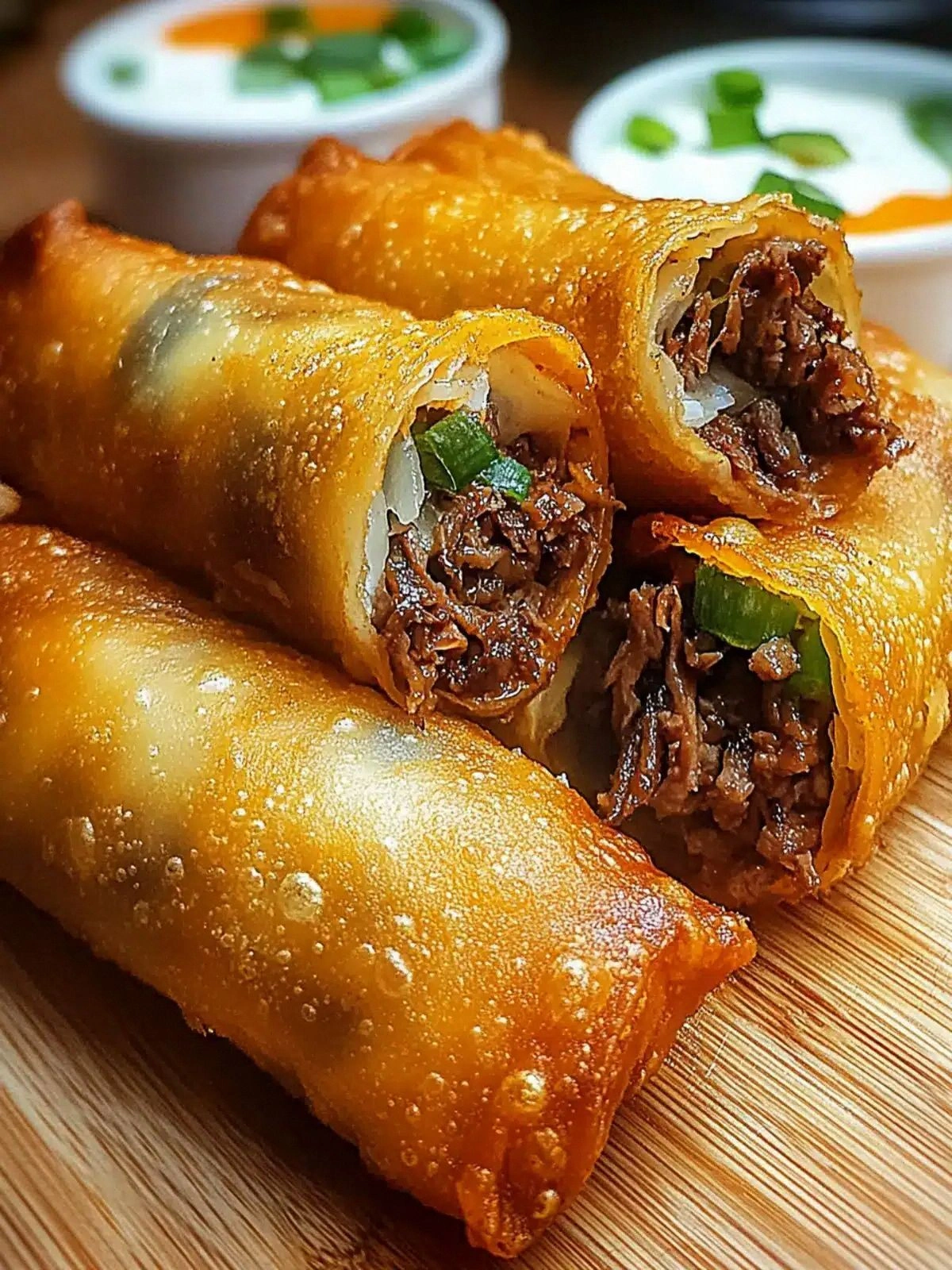
- Visual Appeal: The golden edges of the wrappers, the gleaming cheese, and the bright green pepper create a dish that looks as good as it tastes.
- Ease of Assembly: The filling is pre‑cooked, so you can roll and fry in under 30 minutes—perfect for last‑minute game‑day snacks.
- Crowd‑Pleaser: Whether you’re feeding a few friends or a packed house, the familiar cheesesteak flavor lures everyone in, while the egg roll format keeps it fun.
- Make‑Ahead Friendly: The filling can be pre‑prepared and frozen; just roll and fry when you’re ready, saving precious prep time.
- Ingredient Quality: Using a high‑grade rib‑eye guarantees a buttery texture, while fresh bell pepper adds a crisp bite that cuts through the richness.
- Uniqueness: No other snack blends the iconic Philly cheesesteak with the handheld crunch of an egg roll—this is a true culinary hybrid.
Inside the Ingredient List
The Flavor Base
The rib‑eye steak is the heart of this dish. I choose a lean cut with just enough marbling to keep it juicy while still allowing the seasoning to penetrate. If you’re on a budget, sirloin works as a substitute, but be careful not to overcook it—steak that’s too tough will ruin the delicate balance of flavors. A quick sear on high heat for 30 seconds per side locks in the juices before the steak is simmered with onion, pepper, and a splash of Worcestershire sauce that brings a savory depth reminiscent of a classic cheesesteak.
The Texture Crew
Green bell pepper adds a bright crunch that contrasts the softness of the melted cheese. Slice it into thin strips so it cooks evenly and doesn’t overpower the meat. Onions, when sautéed until golden, release a natural sweetness that lifts the entire filling. If you’re looking for a smoky twist, replace regular onions with smoked onions or add a pinch of smoked paprika. These small changes can elevate the dish without complicating the process.
The Unexpected Star
Provolone cheese is the secret to that silky, gooey texture that coats the steak and peppers. I choose a high‑quality provolone because it melts smoothly and carries a mild, slightly sharp flavor that complements the beef. If you prefer a sharper bite, swap it for sharp cheddar or a blend of provolone and mozzarella for a milder melt. The key is to slice the cheese thinly so it melts quickly and doesn’t make the wrappers soggy.
The Final Flourish
Egg roll wrappers are the vehicle that delivers the crunch. Use store‑bought wrappers for convenience, but if you can find fresh wonton wrappers, they’ll give an even crispier edge. The 2 cups of oil should be hot enough that a small piece of wrapper sizzles instantly; if the oil is too cool, the wrappers will absorb oil and become greasy. To keep the fillings from leaking, make sure each wrapper is sealed tightly, and press the edges with a clean cloth or parchment to ensure a good seal.
Everything's prepped? Good. Let's get into the real action...
The Method — Step by Step
- First, trim any excess fat from the rib‑eye and slice the meat into 1/8‑inch strips. This thickness allows the steak to cook quickly and stay tender, preventing it from drying out during frying. Place the strips in a bowl, season lightly with salt and pepper, and let them sit for 5 minutes while you prep the rest of the filling.
- Heat a tablespoon of oil in a large skillet over medium‑high heat. Add the sliced onions and bell pepper, cooking until the onions turn translucent and the pepper softens, about 4–5 minutes. The onions should release a sweet aroma that signals they’re ready for the next step.
- Add the beef strips to the skillet and sear them for 30 seconds on each side until they develop a brown crust. This quick sear locks in juices and gives the steak a restaurant‑grade flavor. Stir in a splash of Worcestershire sauce, letting the mixture simmer for 2 minutes to meld the flavors.
- Reduce the heat to low, cover the skillet, and let the mixture cook for another 5 minutes, allowing the beef to finish cooking without overcooking. The filling should be moist but not liquid; if it looks too dry, add a teaspoon of beef broth to keep it tender.
- While the filling rests, lay out the egg roll wrappers on a clean surface. Place a tablespoon of the beef mixture in the center of each wrapper, then top with a slice of provolone. Fold the bottom corner over the filling, tuck in the sides, and seal the top edge with a dab of water. The result should be a neat, sealed roll that’s ready for frying.
- Heat 2 cups of oil in a deep skillet or pot to 350°F. Gently slide the rolls into the oil, cooking in batches to avoid overcrowding. Fry each roll for 3–4 minutes, turning occasionally, until the wrappers are a deep golden brown. The internal temperature of the filling should reach 165°F to ensure safety.
- Use a slotted spoon to remove the rolls from the oil, letting the excess oil drain on a rack or paper towels. Let them rest for a minute; the steam will finish melting the cheese inside, creating that luscious gooey center that’s the hallmark of a great cheesesteak.
- Serve hot, accompanied by a side of marinara sauce for dipping or a creamy ranch for a tangy contrast. The combination of crispy edges, savory filling, and molten cheese makes each bite a celebration of flavor that will keep your guests coming back for more.
That's it — you did it. But hold on, I've got a few more tricks that'll take this to another level…
Insider Tricks for Flawless Results
The Temperature Rule Nobody Follows
Many people fry egg rolls at a high heat, which can burn the wrapper before the filling is heated through. I keep the oil at a steady 350°F, using a thermometer to maintain consistency. This temperature allows the wrappers to crisp evenly while giving the beef and cheese ample time to melt. If you’re unsure, test the oil by dropping a small piece of wrapper; it should sizzle softly and rise to the surface within a second.
Why Your Nose Knows Best
As the rolls fry, the aroma of melting cheese and seared meat will fill your kitchen. Trust that scent—if it’s a rich, savory perfume, you’re on the right track. If it smells overly greasy or burnt, lower the heat or drain the oil. Your nose is a reliable guide, especially when the visual cues are subtle.
The 5-Minute Rest That Changes Everything
After frying, let the rolls rest for five minutes on a wire rack. This step allows the steam to redistribute the heat, ensuring the cheese melts uniformly. A friend once skipped this rest and served the rolls immediately; the cheese was still hard in the center, and the experience was less than stellar. Give them a minute, and the difference is remarkable.
Use Fresh, Not Frozen, Wrappers
Frozen wrappers can be convenient, but they tend to be softer and more prone to tearing. Fresh wrappers hold up better under the heat, producing a crispier exterior. If you’re making a large batch, consider buying them in bulk to keep costs low.
Season the Filling, Not the Wrapper
Over‑seasoning the wrapper can make the filling taste uneven. Keep the seasoning light on the wrapper and focus on the beef, onion, and pepper mixture. A touch of salt and pepper on the filling is sufficient; the cheese will add its own saltiness.
Creative Twists and Variations
This recipe is a playground. Here are some of my favorite ways to switch things up:
Spicy Jalapeño Kick
Add thinly sliced jalapeños to the beef mixture for a fiery heat that pairs wonderfully with the mild provolone. The heat cuts through the richness and adds a vibrant bite that’s perfect for a summer barbecue.
Cheddar‑Bacon Fusion
Swap provolone for sharp cheddar and incorporate crumbled bacon into the filling. The smoky bacon and sharp cheddar create a flavor profile that’s reminiscent of a breakfast sandwich, making it ideal for brunch.
Vegetarian Version
Replace the steak with sautéed mushrooms and use a vegan cheese alternative. The earthy mushrooms and melty cheese create a satisfying vegetarian option that still delivers that cheesy, savory experience.
Asian‑Inspired Twist
Marinate the beef in soy sauce, garlic, and ginger before cooking, then roll it with shredded carrots and scallions. This fusion adds an umami punch and a fresh crunch that’s a departure from the traditional cheesesteak flavor.
Sweet & Smoky BBQ
Brush the finished rolls with a smoky BBQ sauce before serving. The sweet glaze and smoky undertones complement the beef’s savory profile, creating a crowd‑pleasing option for tailgate parties.
Cheese Lover’s Delight
Layer multiple cheese slices—provolone, mozzarella, and a hint of blue cheese—inside the filling. The combination of creamy, sharp, and tangy cheeses turns each bite into a cheese lover’s dream.
Storing and Bringing It Back to Life
Fridge Storage
Cool the cooked rolls completely, then place them in an airtight container or a resealable bag. Store in the refrigerator for up to 2 days. Before reheating, let them sit at room temperature for 15 minutes to reduce moisture buildup.
Freezer Friendly
Wrap each roll individually in parchment paper, then place them in a freezer bag. Freeze for up to 3 months. To reheat, bake at 350°F for 15–20 minutes or microwave on high for 2 minutes, then finish in a hot skillet to crisp the wrapper.
Best Reheating Method
Reheat in a skillet with a splash of water—just enough to create steam—then cover for 2 minutes. This technique restores the crispness of the wrapper while ensuring the cheese melts evenly. A tiny splash of water prevents the wrapper from drying out and keeps the interior moist.