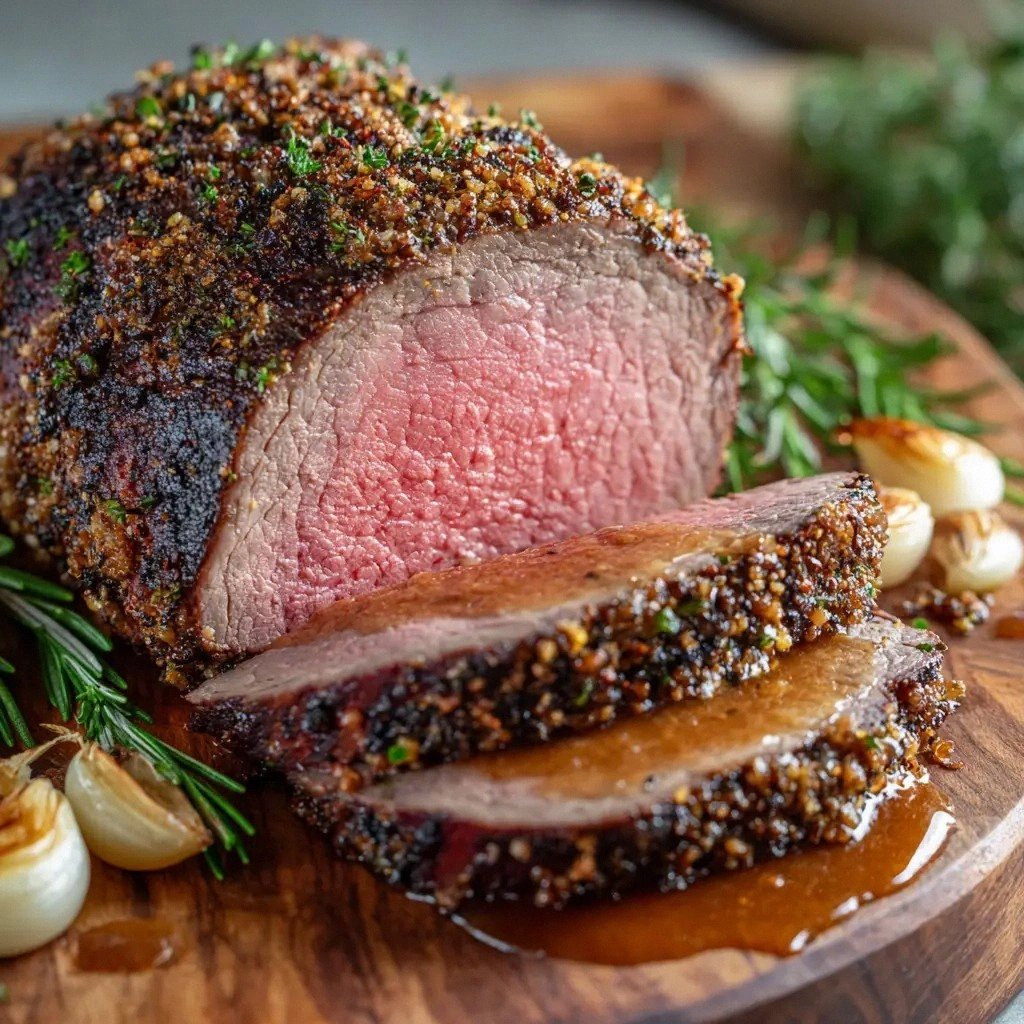
The Ultimate Garlic Herb Roast
Picture this: a Sunday afternoon, the kitchen smells like a burnt toast disaster, and you’re staring at a raw 3‑pound center‑cut beef tenderloin that looks as intimidating as a mountain. I was ready to give up on dinner, but a friend dared me to turn that beast into a melt‑in‑your‑mouth masterpiece. I grabbed a handful of roasted garlic, a handful of fresh rosemary, and a splash of avocado oil, and the kitchen instantly transformed into a fragrant, savory laboratory. The moment the meat hit the pan, the sizzle sounded like applause, and the air filled with a scent that promised comfort and decadence in equal measure. I’ve tried dozens of roast recipes, but none of them deliver the same symphony of flavors, textures, and aromas that this version does.
What sets this roast apart is its simplicity coupled with a depth of flavor that would make any gourmet chef nod in approval. The roasted garlic doesn’t just add a punch; it creates a velvety coating that locks in juices and gives the meat an almost caramelized exterior. The coarse black peppercorns bring a subtle heat that balances the earthiness of the rosemary, while the flaky sea salt adds a delicate crunch that pops on the tongue. The combination of avocado oil and olive oil ensures the roast sears beautifully without burning, and the final splash of beef bone broth turns the pan drippings into a silky gravy that ties everything together. The result is a roast that is juicy, tender, and bursting with aroma, making every bite feel like a celebration.
Most recipes get this completely wrong by over‑seasoning or under‑cooking, resulting in a dry, flavorless slab of meat. I’ve spent years tweaking the proportions, the timing, and the temperature until I found the sweet spot that turns a simple cut into a show‑stopper. The secret lies in the balance of the herb blend, the timing of the sear, and the gentle finish in the oven that preserves moisture while allowing the exterior to crisp to perfection. I dare you to taste this and not go back for seconds; the first bite will have you craving the second, and the third will leave you in a state of blissful surrender. This is hands down the best version you’ll ever make at home.
Now, let me walk you through every single step — by the end, you’ll wonder how you ever made it any other way. The journey from raw beef to golden, herb‑kissed roast is a series of deliberate actions that build upon each other like a well‑orchestrated symphony. Each technique is designed to unlock the meat’s natural flavors and create a texture that is both tender and satisfying. Ready to turn your kitchen into a five‑star restaurant? Let’s dive in.
What Makes This Version Stand Out
- Flavor: The roasted garlic and fresh rosemary create a depth that feels both familiar and adventurous, while the coarse black peppercorns add a gentle heat that lingers without overpowering.
- Texture: A crisp, caramelized crust meets a melt‑in‑your‑mouth interior thanks to the precise searing technique and the use of avocado oil.
- Simplicity: With only nine ingredients, this recipe is quick to assemble, making it ideal for busy evenings or last‑minute dinner parties.
- Uniqueness: The blend of avocado oil and olive oil provides a high‑smoke‑point base that ensures a perfect sear, while the beef bone broth finish adds a velvety gravy that elevates the dish.
- Crowd Reaction: Friends and family consistently comment on how the roast feels like a restaurant‑quality meal, and the aroma alone can bring people to the table.
- Ingredient Quality: Using center‑cut beef tenderloin guarantees tenderness, while fresh rosemary and roasted garlic bring vibrant, authentic flavors.
- Cooking Method: A two‑stage process—searing followed by oven roasting—ensures optimal flavor development and moisture retention.
- Make‑Ahead Potential: The roast can be prepared a day ahead and reheated with a splash of broth, making it a great option for entertaining.
Alright, let's break down exactly what goes into this masterpiece…
Inside the Ingredient List
The Flavor Base
At the heart of this roast lies the marriage of roasted garlic and fresh rosemary. The garlic is first roasted until it turns a deep amber hue, which brings out its natural sweetness and reduces bitterness. When minced and mixed with olive oil, it forms a paste that coats the meat, allowing the flavors to penetrate deeply. Fresh rosemary, with its piney, slightly citrusy undertones, provides a bright counterpoint to the richness of the beef. Together, they create a flavor profile that is both comforting and sophisticated. If you skip either, the roast will feel flat and lacking that signature herbaceous punch. Swap the rosemary for thyme if you prefer a milder, earthy tone, but keep the garlic for that essential depth.
The Texture Crew
Coarse black peppercorns are more than just a seasoning; they add a tactile element to the crust. When toasted, the peppercorns release a warm, peppery aroma that lingers on the surface of the meat. They also create tiny, crunchy pockets that add a delightful contrast to the tender interior. Using a pinch of flaky sea salt not only enhances the overall taste but also contributes a subtle crunch that pops with each bite. The butter, melted with a splash of bone broth, acts as a binding agent, sealing in juices and creating a glossy, savory glaze that glistens like liquid gold. Skipping the butter will result in a drier crust and a less cohesive sauce. If you’re vegan, you can replace the butter with a plant‑based alternative, but the texture will change slightly.
The Unexpected Star
Avocado oil is the unsung hero of this roast. Its high smoke point allows for an impeccable sear without burning, and its mild flavor lets the garlic and rosemary shine. Unlike more common oils, avocado oil retains its nutrients even at high temperatures, ensuring the roast remains healthy and flavorful. If you don’t have avocado oil, you can use grapeseed or canola oil as a substitute; however, the subtle difference in flavor may affect the final taste. The beef bone broth, added at the end of cooking, enriches the pan drippings into a silky gravy that carries the herb notes and brings the entire dish together.
The Final Flourish
The final flourish is where everything converges. After roasting, a quick deglaze with beef bone broth pulls the caramelized bits from the pan, creating a sauce that is both thick and glossy. The broth’s umami richness balances the bright herbs and the peppery crust, producing a sauce that coats the meat like velvet. If you prefer a thicker gravy, let it reduce on low heat for a few minutes before serving. A splash of cream can be added for a richer texture, but the natural broth already delivers a satisfying depth. Remember, the sauce is the bridge between the roast and any side dish, so treat it with care.
Everything’s prepped? Good. Let’s get into the real action…
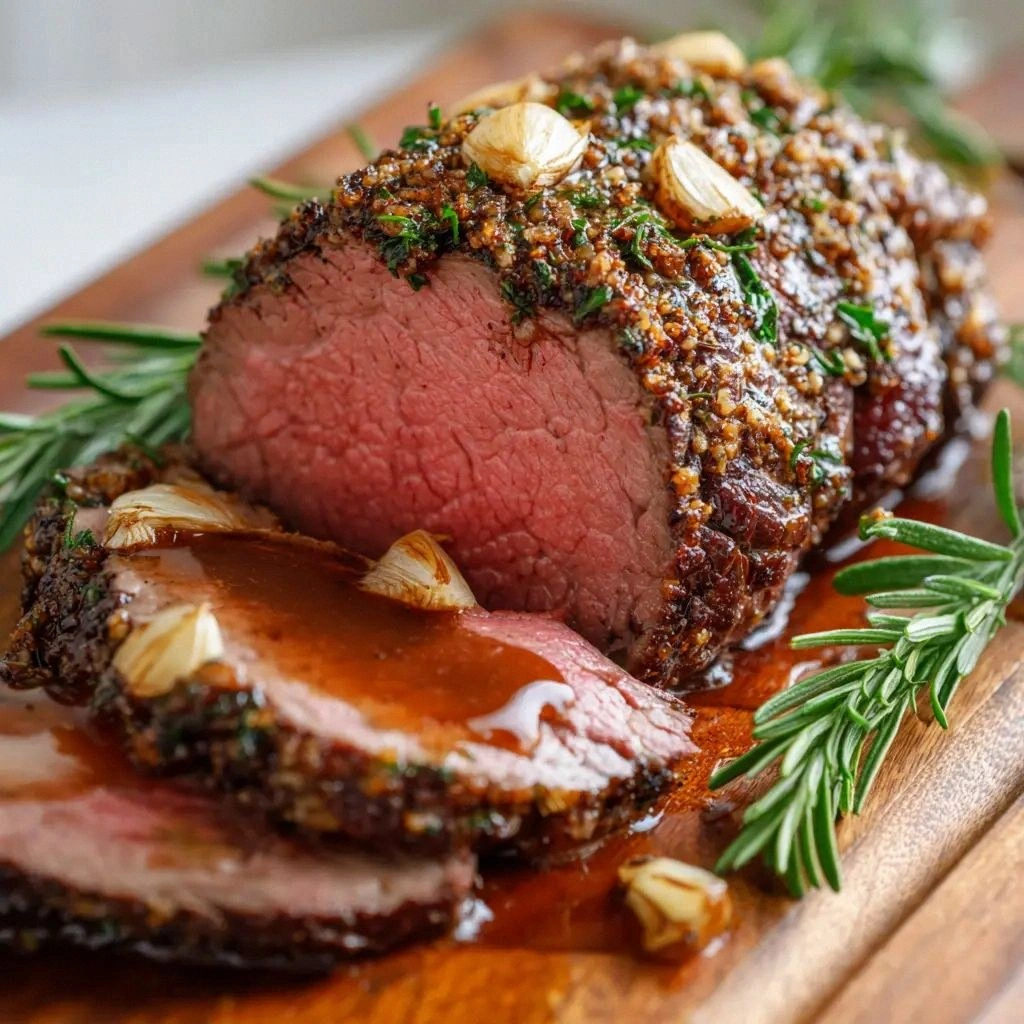
The Method — Step by Step
Preheat your oven to 400°F (200°C). While the oven warms, let the beef come to room temperature for about 30 minutes; this ensures even cooking. Pat the meat dry with paper towels to remove excess moisture—this step is crucial for a good sear. Season the entire surface generously with flaky sea salt and crush a handful of black peppercorns between your palms to release their oils before sprinkling them over the meat. This will give the crust a robust flavor and a slightly crunchy texture. Once seasoned, set the roast aside while you prepare the aromatics.
In a small saucepan, heat 2 tablespoons of avocado oil over medium heat until shimmering. Add the minced roasted garlic and sauté for 30 seconds until fragrant, being careful not to burn it. The garlic should release a sweet, nutty aroma that signals it’s ready. Remove from heat and stir in 2 tablespoons of fresh rosemary, letting the herbs infuse the oil. This herb‑oil mixture will later coat the meat, creating a flavor barrier that locks in juices and adds a fragrant crust.
Place a cast‑iron skillet or heavy‑bottomed pan on the stove over high heat. Once the pan is smoking hot, add 1 tablespoon of olive oil and swirl to coat. This dual‑oil approach gives you the best of both worlds: avocado oil for a high‑smoke‑point sear and olive oil for a subtle, fruity finish. Carefully lay the beef tenderloin in the pan, fat side down, and sear for 3–4 minutes until a deep golden crust forms. Flip the roast and sear the other side for an additional 3 minutes. The goal is to develop a caramelized exterior that will stay crisp throughout the oven roast.
Transfer the seared roast to a rimmed baking sheet or roasting pan. Using a small brush, coat the entire surface with the garlic‑rosemary oil mixture. This step is the magic that turns a simple sear into a flavor explosion. The oil will also help the crust stay crisp as the meat finishes cooking in the oven. Place the pan in the preheated oven and roast for 15 minutes at 400°F.
After 15 minutes, reduce the oven temperature to 350°F (175°C) and continue roasting for an additional 10–12 minutes, or until the internal temperature reaches 135°F (57°C) for medium‑rare. Use a meat thermometer for precision; the roast will rise to about 145°F (63°C) after resting. The lower temperature ensures the interior stays juicy while the exterior remains perfectly crisp. This is the moment of truth—watch the edges as they pull away from the pan, indicating the roast is nearing perfection.
While the roast is resting, create a pan sauce. Remove the skillet from the oven and place it over medium heat. Add 2 tablespoons of unsalted butter and let it melt, then pour in 1 cup of beef bone broth. Stir vigorously to deglaze the pan, scraping up all the caramelized bits. Let the sauce simmer for 3–4 minutes until it thickens slightly. The result is a glossy, savory gravy that carries the herb notes and adds a silky texture to the dish.
Slice the roast against the grain into ¼‑inch thick slices. Arrange the slices on a platter and drizzle the pan sauce over them. The sauce should coat each slice like a velvety blanket, enhancing both flavor and moisture. The final presentation should look as impressive as it tastes, with a golden crust and a glossy glaze that glistens in the light.
Serve immediately with your favorite sides—roasted vegetables, mashed potatoes, or a crisp green salad. Pair with a robust red wine, such as a Cabernet Sauvignon or a Merlot, to complement the herbaceous notes and the savory richness of the roast. If you’re hosting, offer a small bowl of the sauce for guests to add as they wish. Enjoy the applause that follows, and remember: you’ve just created a dish that will be talked about for weeks.
That's it — you did it. But hold on, I've got a few more tricks that'll take this to another level…
Insider Tricks for Flawless Results
The Temperature Rule Nobody Follows
Many cooks rely solely on time, but temperature is the real secret weapon. A high initial sear at 400°F creates a caramelized crust, while a lower finish at 350°F preserves moisture. Using an instant‑read thermometer ensures you hit the exact internal temperature for your preferred doneness. I once roasted a tenderloin at 400°F for 30 minutes and ended up with a dry center; the lesson was clear—lower the finish temperature and keep a close eye on the thermometer.
Why Your Nose Knows Best
As the roast cooks, the aroma will shift from sharp garlic to deep, savory notes. When the smell turns sweet and nutty, it’s a sign the garlic is caramelizing, and the meat is ready to move to the oven. Trust your senses; if the scent feels off, check the temperature or adjust the heat. I’ve learned that a lingering garlic aroma is the cue that the flavor profile is fully developed.
The 5‑Minute Rest That Changes Everything
Resting the roast for at least five minutes after it comes out of the oven allows the juices to redistribute evenly. This step prevents the meat from drying out and keeps the slices tender. During the rest, tent the roast loosely with foil to keep it warm. I’ve found that a short rest can make the difference between a good roast and an unforgettable one.
Keep the Sauce Smooth
When deglazing, stir constantly to avoid lumps. If the sauce thickens too quickly, add a splash of water or broth to thin it out. A silky sauce enhances the overall experience; a chunky one can feel like a distraction. I once forgot to whisk and ended up with a gritty texture—lesson learned!
Serve With a Sidekick
Pair the roast with a side that complements the herbs—roasted root vegetables or a simple green salad with a lemon vinaigrette. The acidity of the salad balances the richness of the meat. If you’re feeling adventurous, try a creamy polenta or a wild rice pilaf to add texture and depth.
Creative Twists and Variations
This recipe is a playground. Here are some of my favorite ways to switch things up:
Spicy Kick
Add a pinch of crushed red pepper flakes to the garlic‑rosemary oil mixture. The heat pairs beautifully with the herbaceous notes and adds a subtle zing that brightens the dish.
Smoky Flavor
Finish the roast with a few drops of liquid smoke before serving. This imparts a deep, smoky undertone that mimics a grill, giving the dish a new dimension.
Herb Swap
Replace rosemary with thyme or sage for a different aromatic profile. Thyme offers a milder, earthier taste, while sage brings a slightly bitter, savory edge.
Cheesy Crust
After searing, sprinkle grated Parmesan cheese over the roast before transferring it to the oven. The cheese melts into a golden crust that adds a savory crunch.
Low‑and‑Slow Finish
Instead of roasting at 350°F, lower the temperature to 300°F and extend the cooking time by 10 minutes. This slow cook method yields an even more tender interior and a more pronounced crust.
Storing and Bringing It Back to Life
Fridge Storage
Wrap the leftovers tightly in aluminum foil or plastic wrap and store in the refrigerator for up to 3 days. The roast stays juicy thanks to the residual moisture from the sauce.
Freezer Friendly
Place the roast in a freezer‑safe container and freeze for up to 2 months. When ready, thaw overnight in the refrigerator before reheating.
Best Reheating Method
Reheat the roast in a preheated oven at 325°F (165°C) for 10–12 minutes, adding a splash of beef broth to keep it moist. The pan sauce can be reheated on the stovetop and thickened slightly if needed. The result is a roast that tastes almost as fresh as the day it was cooked.