I was standing in a cramped kitchen, the scent of burnt toast still clinging to the counter, when my friend dared me to create the ultimate tropical tart. The moment I sliced the dragon fruit, its ruby flesh glimmered like a secret gem, and I knew I was onto something. The combination of that bright, subtle sweetness with a citrus kick felt like a fresh wind on a summer afternoon. I could already hear the applause echoing from my living room as the first bite melted on the tongue. This is not just a dessert; it’s a passport to a sun‑kissed island in a single bite.
Picture the kitchen humming with anticipation, the timer ticking, and the air thick with the aroma of butter and citrus. The glossy dragon fruit pulp sits in a bowl, its bright pink interior promising a burst of flavor, while the lime juice glistens like liquid sunshine. The sound of the butter melting in a pan is a comforting crackle, a reminder that every great recipe begins with a simple, honest ingredient. The texture of the crust, when pressed, should feel crisp yet buttery, a delicate balance that feels almost rebellious. If you’ve ever wondered why some tarts feel like a cloud and others feel like a crunch, the secret lies in the precise dance of flour and fat.
This version stands out because I’ve taken the classic tart and injected it with a bold, almost audacious twist that turns every bite into a revelation. The dragon fruit isn’t just a garnish; it’s the star that carries the tart’s flavor profile, delivering a subtle sweetness that pairs perfectly with the zesty lime. The coconut cream adds a velvety richness that lingers on the palate, creating a harmony that is both exotic and comforting. The black sesame seeds provide a nutty crunch, a textural contrast that elevates the overall experience. And the best part? The recipe is surprisingly forgiving, making it a safe bet for both seasoned chefs and kitchen novices.
I dare you to taste this and not go back for seconds. Most recipes get this completely wrong, relying on heavy sugar or overcooking the crust. Here’s what actually works: a buttery, flaky base that holds the vibrant filling without becoming soggy. Picture yourself pulling this out of the oven, the whole kitchen smelling incredible, the tart glistening like a jewel. Let me walk you through every single step — by the end, you’ll wonder how you ever made it any other way.
What Makes This Version Stand Out
- Flavor Harmony: The dragon fruit’s natural sweetness balances the sharp bite of lime, creating a symphony that lingers on the tongue. The coconut cream weaves a silky background note, preventing the tart from feeling overly acidic. Together, they form a taste profile that feels both exotic and comforting.
- Texture Mastery: The crust is light and flaky, yet sturdy enough to cradle the juicy filling without becoming soggy. The black sesame seeds add a subtle crunch that breaks the monotony of the creamy filling. The result is a multi‑sensory experience that feels like a dance of textures.
- Ingredient Quality: Using fresh dragon fruit ensures a vibrant color and a delicate flavor that processed fruit can’t match. Fresh lime juice provides bright acidity, while coconut cream adds natural fat for richness. The quality of each component elevates the final product.
- Simplicity & Speed: The recipe requires only eight ingredients and under an hour from prep to finish. No fancy equipment or complex techniques are needed, making it accessible to beginners. The quick assembly means you can impress guests on short notice.
- Crowd‑Pleaser Factor: The bright color and tropical aroma make it a showstopper at parties. Guests often ask for the recipe after the first bite, turning the tarts into a conversation starter. The flavor profile is universally appealing, satisfying sweet and savory cravings alike.
- Make‑Ahead Potential: The crust can be baked ahead of time and refrigerated, while the filling can be assembled just before serving. This flexibility allows you to focus on other tasks without compromising freshness. The tarts hold up well for up to two days in the fridge.
- Unique Presentation: The contrast between the pale pink interior and the dark sesame seeds creates a visually stunning effect. Serve them on a white plate, and the colors pop like a piece of modern art. The presentation alone can elevate a simple dessert into a memorable experience.
Inside the Ingredient List
The Flavor Base
All‑purpose flour is the backbone of the crust. It provides the structure that holds the filling together while allowing the crust to crisp beautifully. If you prefer a gluten‑free version, swap for a 1:1 gluten‑free blend, but keep the ratio the same to maintain the right consistency. Skipping flour will result in a crumbly, soggy base that can’t support the luscious filling.
The Texture Crew
Unsalted butter is the secret to a buttery, flaky crust. It melts into tiny pockets that create a delicate crumb. Use cold butter cut into small cubes; this technique helps the dough retain air pockets during baking. If you’re using a pre‑made crust, ensure it’s chilled to preserve that flaky quality.
The Unexpected Star
Fresh dragon fruit pulp is the star of this tart. Its bright pink flesh delivers a subtle, almost floral sweetness that complements the lime’s citrus bite. When selecting dragon fruit, look for a fruit that feels slightly firm yet yields to a gentle press; this indicates optimal juiciness. If you can’t find fresh dragon fruit, frozen pulp is a suitable substitute, but thaw it and drain excess moisture for best results.
The Final Flourish
Coconut cream adds a silky, tropical richness that balances the tart’s acidity. It also helps to bind the filling, preventing it from becoming too liquid. Black sesame seeds are the finishing touch, providing a nutty crunch and a striking visual contrast. They can be toasted lightly for an extra depth of flavor.
Everything's prepped? Good. Let's get into the real action...
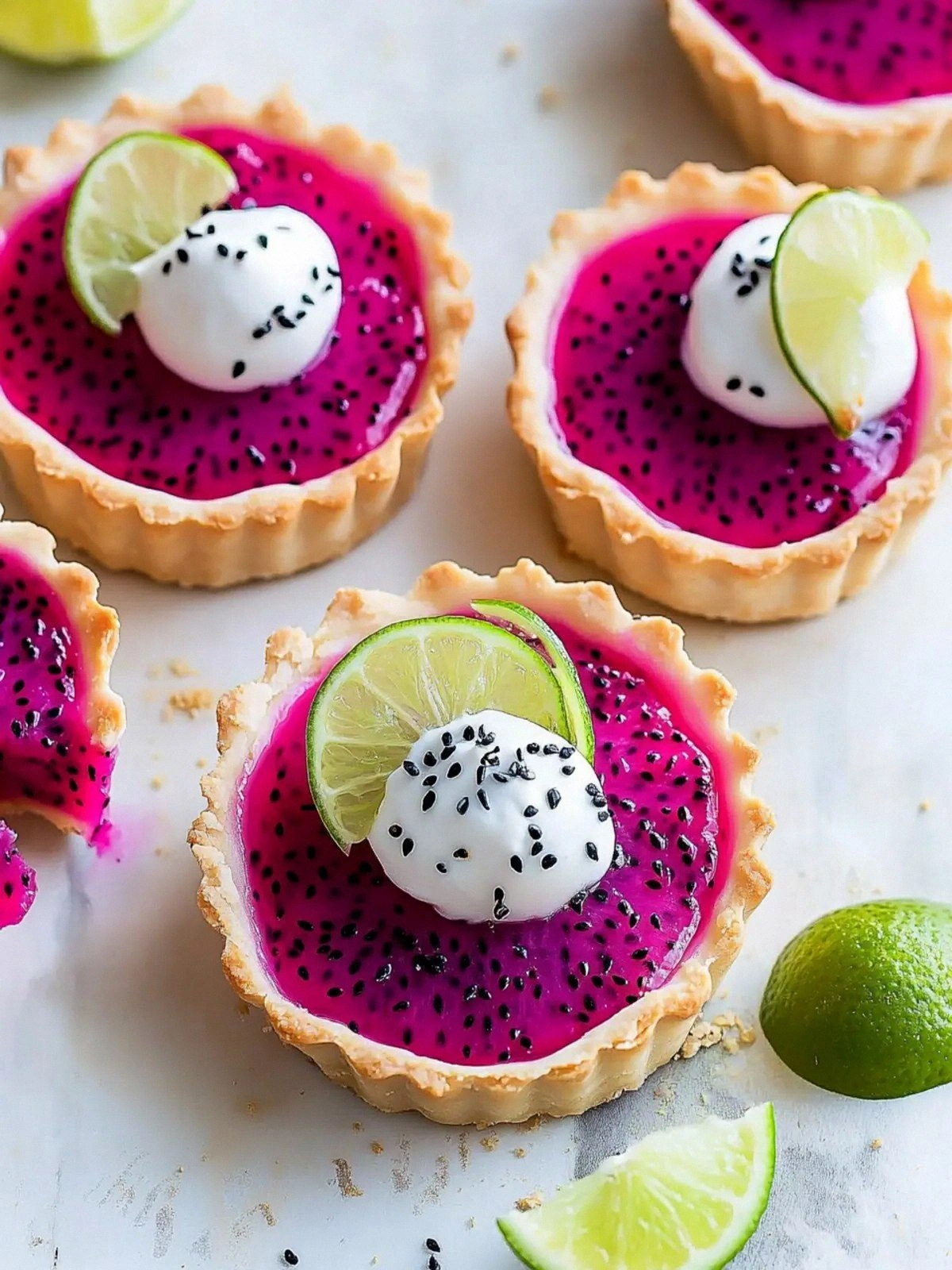
The Method — Step by Step
- Preheat the Oven: Set the oven to 375°F (190°C) and allow it to warm fully before you begin. A properly preheated oven ensures a uniform bake, preventing the crust from sticking or becoming soggy. As the oven heats, the smell of butter will start to mingle with the subtle citrus notes of lime, setting the stage for a sensory experience. This is the moment where anticipation builds and the kitchen feels alive.
- Make the Dough: In a large bowl, combine flour, sugar, and a pinch of salt. Use a pastry cutter or your fingers to incorporate the cold butter cubes until the mixture resembles coarse crumbs. The key is to keep the butter cold; if it melts, the dough will become greasy. Once the butter is evenly distributed, add the egg and mix until the dough comes together in a smooth ball. This dough should be pliable but not sticky.
- Roll and Line: On a lightly floured surface, roll the dough into a circle about 12 inches in diameter. Carefully transfer it to a 9-inch tart pan, gently pressing it into the bottom and up the sides. Trim the excess dough, leaving a 1-inch overhang. Fold the overhang under itself to create a neat edge. This step is crucial for a professional look and ensures the crust stays in place during baking.
- Blind Bake: Line the crust with parchment paper and fill it with pie weights or dried beans. Bake for 15 minutes, then remove the weights and parchment. Return the crust to the oven for an additional 5 minutes or until it turns a light golden brown. This blind baking step locks in the crust’s structure and prevents it from becoming soggy when the filling is added.
- Prepare the Filling: In a bowl, whisk together the dragon fruit pulp, lime juice, and sweetener until smooth. The mixture should be thick but pourable, like a light custard. If the filling is too runny, add a tablespoon of coconut cream to thicken it. This step ensures the filling will hold its shape once set.
- Watch Out: When adding the filling to the crust, do not overfill. The filling should be about 1/4 inch below the crust edge. Overfilling can cause leaks and uneven setting. Keep the filling level consistent across all tarts for an even bake.
- Bake the Tarts: Place the filled tarts in the oven and bake for 20-25 minutes, or until the filling is set and the edges of the crust are golden. The filling should look slightly translucent at the center, indicating it’s fully set. Keep an eye on the crust to avoid overbrowning. A properly baked tart will have a crisp edge with a soft, creamy interior.
- Cool and Finish: Remove the tarts from the oven and let them cool on a wire rack for 10 minutes. Sprinkle toasted black sesame seeds over the top for a final crunch and a pop of color. The sesame seeds will add a nutty aroma that complements the tropical flavors. This finishing touch turns an ordinary tart into a gourmet masterpiece.
- Serve and Enjoy: Once cooled, slice the tarts into wedges and serve immediately. The contrast between the buttery crust, sweet filling, and citrus tang will leave your guests craving more. If you prefer a chilled version, refrigerate for 30 minutes before serving for a firmer texture. The tarts are perfect for brunch, dinner parties, or a sweet dessert after a savory meal.
That's it — you did it. But hold on, I've got a few more tricks that'll take this to another level...
Insider Tricks for Flawless Results
The Temperature Rule Nobody Follows
Many bakers bake at the wrong temperature, causing the crust to become either too soggy or too burnt. Bake at a steady 375°F (190°C) and avoid opening the oven door until the final 5 minutes. This ensures even heat distribution and a crisp crust. A quick test is to touch the bottom of the pan; it should feel hot but not scorching.
Why Your Nose Knows Best
The aroma of baking bread is a powerful cue for judging doneness. When the crust releases a nutty, buttery scent, it’s ready to be removed. Trust your nose to avoid overbaking, which can dry out the filling. This sensory checkpoint is as reliable as a thermometer for many home bakers.
The 5-Minute Rest That Changes Everything
Letting the tarts rest for 5 minutes after baking allows the filling to set fully, preventing it from sliding off the crust when sliced. It also lets the flavors meld together, creating a more cohesive taste. Skip this step and you risk a messy, uneven bite.
Keep the Crust Crisp
If you notice the crust softening after baking, it’s likely due to moisture from the filling. To counter this, place a sheet of parchment paper over the top of the crust before adding the filling. This barrier helps keep the crust dry and crisp.
Finish with a Light Dust
A light dusting of powdered sugar or a drizzle of lime glaze can elevate the presentation. The glaze adds a glossy finish and a sweet tang that complements the coconut cream. This final touch is simple yet effective, turning a great tart into a showstopper.
Creative Twists and Variations
This recipe is a playground. Here are some of my favorite ways to switch things up:
Spicy Dragon Fruit
Add a pinch of cayenne pepper or a splash of sriracha to the filling for a subtle heat that contrasts with the sweetness. The spice elevates the tart into a bold, adventurous dish. It’s perfect for a summer barbecue or a spicy dessert craving.
Mango‑Lime Fusion
Replace half of the dragon fruit pulp with ripe mango puree for a richer, tropical flavor. The mango adds a velvety texture that pairs beautifully with lime. This variation is a great way to use overripe mangoes and keep your pantry fresh.
Almond Crunch
Swap black sesame seeds for toasted almond slivers to introduce a nutty crunch. Almonds also add a subtle buttery note that complements the coconut cream. This swap is ideal for those with sesame allergies or simply craving a different nutty profile.
Herbal Infusion
Stir in a tablespoon of fresh mint or basil into the filling for an herbal twist. The herb’s bright flavor cuts through the sweetness and adds a refreshing finish. This is especially refreshing on a hot summer day.
Chocolate Drizzle
Drizzle melted dark chocolate over the finished tarts for a decadent finish. The bitterness of the chocolate balances the tropical sweetness, creating a complex flavor profile. This version is a hit for chocolate lovers looking for something different.
Vegan Version
Use a plant‑based egg substitute and dairy‑free coconut cream to keep the recipe vegan. The crust will still turn out flaky and buttery, while the filling remains creamy. This makes the dish accessible to a wider audience without compromising flavor.
Storing and Bringing It Back to Life
Fridge Storage
Store the tarts in an airtight container in the refrigerator for up to two days. Keep the crust separate if you plan to reheat, as the crust can become soggy when left in the filling. This method preserves the freshness of the filling and the crispness of the crust.
Freezer Friendly
Freeze the tarts in a freezer‑safe container or zip‑lock bag for up to one month. Thaw them overnight in the refrigerator before reheating. For best results, reheat in a preheated oven at 350°F (175°C) for 10 minutes, which restores the crust’s crunch.
Best Reheating Method
When reheating, add a splash of water to the bottom of the pan to create steam. This keeps the filling moist and prevents it from drying out. After reheating, let the tarts sit for a few minutes to allow the flavors to settle.